
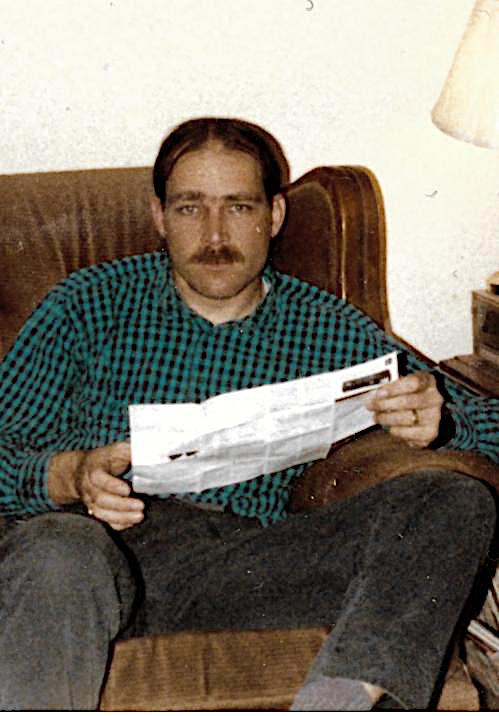
I spent a full career in Education with wide and varied experiences. However, I only spent one year serving as a classroom teacher. I started my teaching career as an “Instructor/Counselor” at Whiskeytown Environmental School. This school was run by the Shasta County Office of Education. My position did not require my teaching credential or my Masters Degree in Outdoor Education, and it paid very little. However, I knew the school’s director, and I knew this was probably his last year at the school. I met Rick at Southern Oregon University, while we were pursuing our Master’s degrees in Outdoor Education. As it turned out, Rick did leave after that year, but I wasn’t hired as his replacement. I had to wait another year for the next opportunity. I was hired this time, and I spent the next decade running the school.
One day, the personnel manager of the County Schools came to my office and had a discussion with me. We had become friends, and he was there to offer me professional advise. He told me that if I continued to stay at Whiskeytown, that I probably would be seen as only able to do that job and would probably eventually retire in that position. That wasn’t a bad situation, but being as I worked my way up into the directorship, I wasn’t paid as well as I probably should have been. I also wasn’t as appreciated as he felt I should be. He advised me that if I wanted more in my career, that I should spend at least a year in the classroom to give me credibility. This was very good advise, for teachers can be very critical of school leaders who’ve never taught in the classroom.
I thought long and hard over his advise. I loved my job at Whiskeytown, but I was being paid at just a little better than a beginning teacher, and the prospects for pay raises were poor. I also am an ambitious person, and I’m always looking for ways to improve my position. So I started looking for open teaching positions. As it happened, an eighth grade teaching position was open at a school that was just two miles down the road I lived on. I knew that outgoing Superintendent/Principal from my work at Whiskeytown. It seemed a good fit and I was offered the position. In order to soften the salary decrease I would take, I also took on coaching all three seasons, was designated the Vice-Principal and the Mentor Teacher. I also was paid extra to be the eighth-grade advisor. I didn’t know what I was getting myself into. I’ve never worked so hard in life as I did that year!
My older sister, Donna, had been a classroom teacher for many years at this point, and she was moving into a consulting role at her district. I inherited many of her teaching props. I set my classroom up that summer with enthusiasm. I had a lot of teaching experience, but I only had the students for five days at a time. This was nice for developing lessons. I would come up with an idea, develop a lesson, try it out on the current week’s students, then refine it and teach it again next week. After a few weeks of this, I would have a pretty polished lesson.
For the most part, the students who came to Whiskeytown were excited to be there. They were easy to teach and manage. For the students who couldn’t behave themselves, I only had to deal with them for less than a week. Being the director of the outdoor school, I got all of the discipline problems that got elevated to the Director’s level. I consulted with the visiting classroom teacher and the principal as well as the parents, but it was all over before the week was done. It is much different in the classroom. Now I had the students all year, and we had to live with the consequences of our decisions and actions. I always thought I was good at relating with the students and I had good control of the students while they were in my care. That was true while I was teaching at the outdoor school on the trails, but it was a whole different situation in the classroom of a public school.
One thing I didn’t realize was this group of students had a long history of messing with teachers and student-teachers. I later found out that during the previous year, they had proudly driven their teacher into a nervous breakdown. She had quit near the end of the year and never went back to teaching. I also realized, well into the school year, that this class was the same class I had trouble with a couple of years before, at Whiskeytown Environmental School. While they were at Whiskeytown, I got a complaint that their hike leader was leering at them. Sexual abuse was a hot topic at the time, and so I had to take the charges seriously. I had a talk with my instructor about the situation. I interviewed all of the students involved, and determined it was an over-active case of sixth grade girl-drama that spilled over unto our staff. Our staff learned that it really doesn’t matter what the actual reality is. What we have to deal with in a public program, where we are taking on the responsibility of caring for children away from home, is public perception. No matter what the facts are, you have to deal with public opinion.
That was the backdrop for my first year teaching in the classroom. I remember asking my sister once, at the beginning of the school year, “When do you get to go to the bathroom?” I was used to walking around campus with a coffee cup in my hand. As I passed the cafeteria, I would refill it. In the classroom, I had to strictly restrict my coffee intake, because I didn’t get an opportunity to take a bathroom break until 10:00, when I got a teacher’s aide for a period. I also set myself up for a hard time, because I set such high standards for myself.
The previous decade, I had taught many workshops for teachers. I developed teaching lessons for outside as well as in the classroom. I felt it was a cop-out to just use the text book. I basically used the text as a reference book for the students and a curriculum guide for me as far as what was to be taught. As far as how to teach these concepts, I felt the lessons should be hands-on, authentic, and done within the construct of a group. I was really into conceptual teaching, which meant that all of the individual lessons built on each other and taught a larger concept. The problem with this style of teaching, I soon found out, was that I had to develop most of the lessons myself, which was taxing on the mind and time-consuming. My teaching assignment was 8th Grade Homeroom, and Science for a 7th-8th grade combination class and a 7th grade class. Other teachers taught the English and Math, but I also taught my class History/Social Science, Physical Education (my original major in college), Art, Music, and an elective or wheel class. To compound my problem, during Back-to-School night I announced that I would be sending home weekly progress reports with the number of missing assignments their student might have.
One night, my wife woke up at 2:00, and I wasn’t home yet. She came down to my classroom to see if I was OK. I was just finishing up tallying everyone’s progress reports so they could be given to the students on time as promised to the parents. I met my self-imposed deadline, but by the time Christmas vacation came along, I had become extremely sick. I never got the flu, but this hit me hard. I had run myself into the ground. After Christmas, I cut the weekly progress reports to every-other week, and soon I was teaching Social Science out of the text book.
I learned valuable lessons on the realities of classroom teaching and being a part of a school staff in a public school setting. This served me well in the future when I was Director of Curriculum for another County Office, and when I was principal of a charter high school I created. However, I really learned much more in the realm of personal interaction and the in’s and out’s of classroom management. The class I inherited had mostly been together since Kindergarten. They happened to have student teachers during their first few years, and then they had a series of long-term subs and first-year teachers. One of the reasons I got this job was because I was a tall male with a loud outdoor voice. The fact that I had been in charge of Whiskeytown Environmental School and had 11 years of being in charge of discipline didn’t hurt. I don’t think they were too interested in my innovative teaching techniques. Of course they didn’t share any of this with me. I’m not sure our new Superintendent/Principal knew any of this, either. As I already stated, this class was proud of the fact that they had literally driven the last teacher into a mental breakdown.
My first clues that this class was different would occur when I would be in the middle of a lesson. At some cue, that I wasn’t aware of, the whole class would suddenly go off-task to total chaos. At first I was totally baffled. What just happened? What did I do? What can I do now? Most days I would go home late, totally exhausted. At a point it seemed I was at battle with my class and some days I would loose the battle.
There were mature and immature 8th grade males in the class who could be very disruptive. There was also an unfortunate boy who was a little different. He was probably on the Autism spectrum, but this wasn’t something that got tested or diagnosed. He was the subject of bullying and was rejected and ridiculed by his classmates. As disruptive and troubling as this was, it paled in the face of the girls in this class. I could handle the disruptive boys. It was pretty straight forward, and I had a handle on it. The girls on the other hand were so mean to each other. Our school district was a mostly upper-middle class area, with the exception of the families that rented houses under the electrical power lines. The girls from the power line area were tormented by the doctor’s and lawyer’s daughters. It was hard to discern exactly what was happening. Things were very deceitful and underhanded. I have to confess that I wasn’t much help for some of those poor girls.
After an exhausting and combative year, I feel I finally won the “war,” by winning most of the class over to what I was trying to do, but it was hard fought and not complete. I have such a huge respect for the challenges of a classroom teacher. I was able to secure a job for the next year in a neighboring county as the Science, Math, Technology, and Environmental Education Consultant, so that was the only year I spent as a classroom teacher. As with most valuable lessons in life, it was the hardest year of my career, but I learned so much that it was well worth the torment and exhaustion.
 Swagerty-Aldrich Family Web Site