
Lincoln Village is a major housing development in Stockton, California. When it was built, it catered to young families recovering from World War II. We lived three houses from the end of the block. Across that street was a vast field of grasses that went forever (in my mind) to the west. To help with that illusion, periodically, you could see a large ocean vessel slowly moving across the fields on the horizon. Stockton has a large inland seaport that afforded those views. I lived the life that was depicted on the hit TV series, The Wonder Years. The neighborhood was filled with children of all ages. I walked two blocks to grade school. All my friends lived within a few blocks of each other. I remember going house-to-house drumming up business for my dandelion pulling business. I think I charged a half cent per dandelion. I also had a paper route and would baby-sit and house-sit for the neighbors. I always seemed to have money in my pocket, even though my parents were trying to get by to the end of the month. I would lend my parents some of my money at that time for things like bread and milk. By high school age, they owed enough money to purchase a car for me.

We lived in a three bedroom, two bath, 1,600 square foot house. All of the houses were either brand new, built within a few years, or about to be built. The houses were built in stages, with each group of houses forming a home association. Each home association had a public swimming pool. Our pool was eventually built at the end of our block. Next to it was a Little League baseball diamond. It was a wonderful place to grow up. The neighborhood was filled with young families and lots of kids to play with.
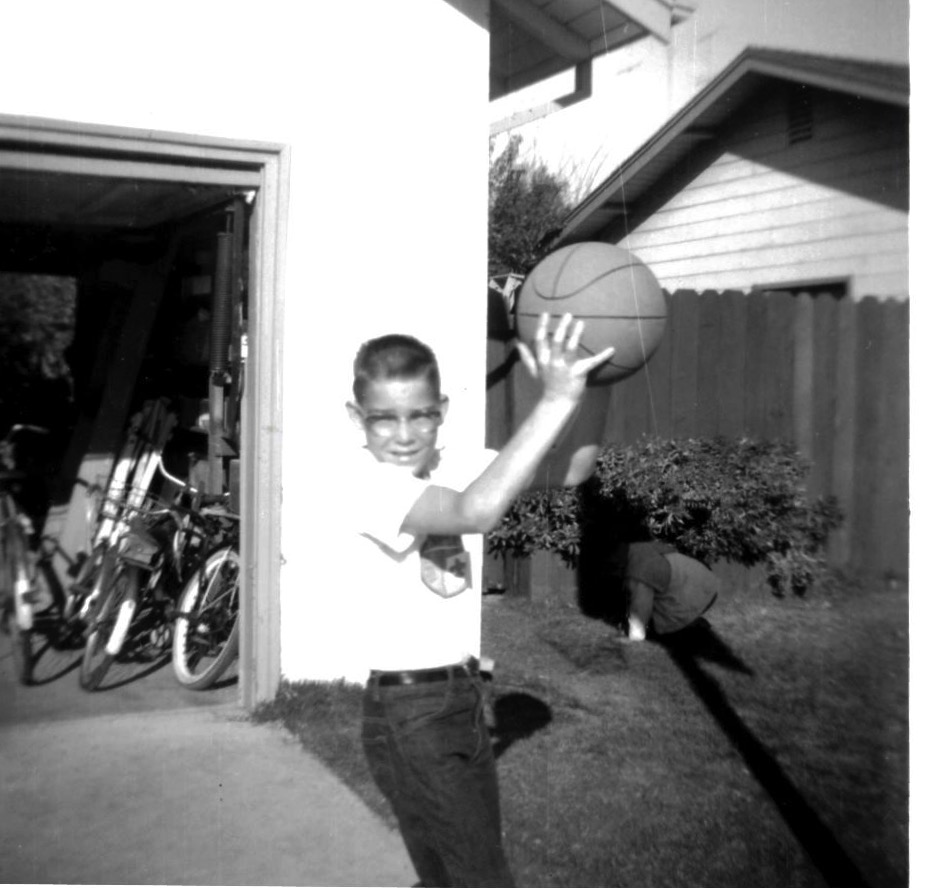
My parents were typical of the middle-class families that lived in Lincoln Village. My parents got married at the beginning of the war, just as they were finishing their education at the College of Pacific in Stockton. My father joined the Navy and was sent to mid-shipman school in South Bend, Indiana. He graduated top in his class, and was held there and became a drill sergeant pushing recruits through their training. Near the end of the war, he was put on an aircraft carrier headed for the final assault on Japan. The atomic bombs were dropped while they were in transit, so he became part of the occupying force when they arrived in Tokyo. After he came home, he was released several days early so he could join his wife who just had their first baby, my sister Donna.
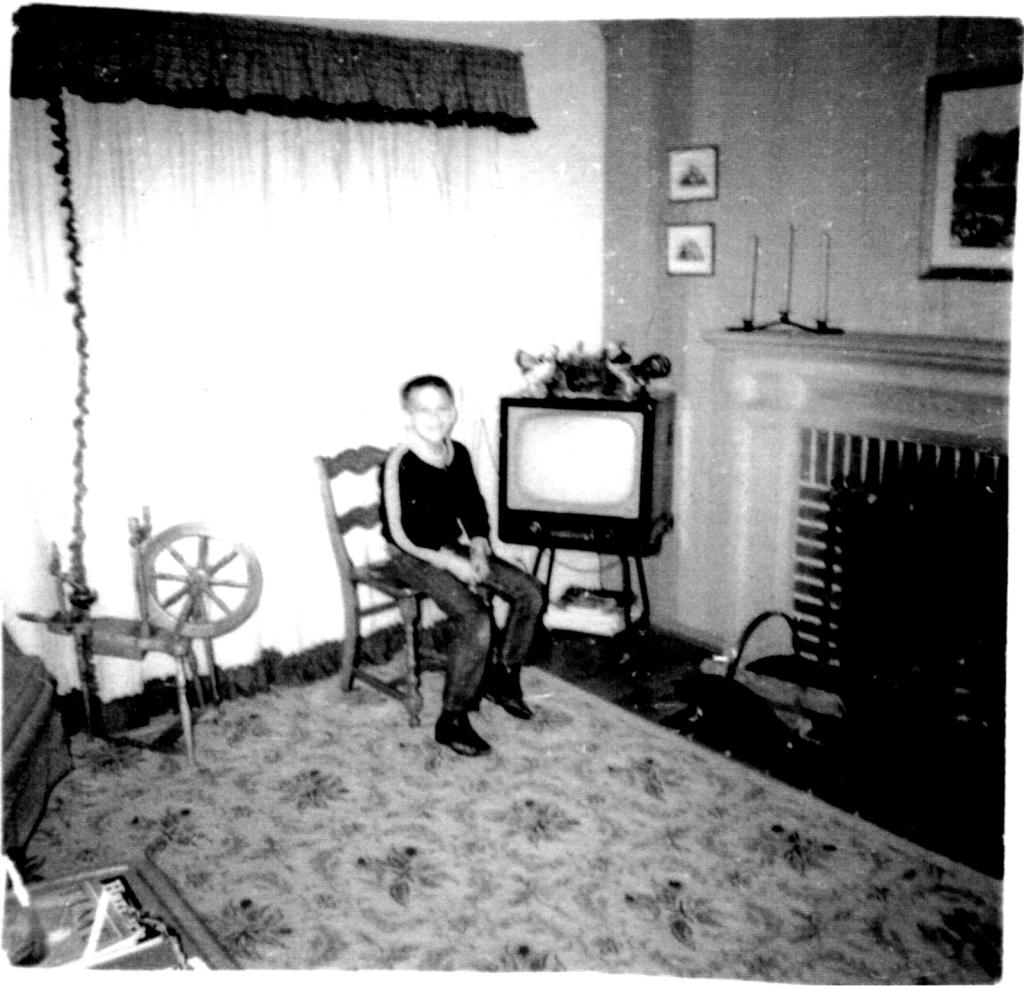
Housing developments like Lincoln Village sprang up all over the country after the war. Many lives that were put on hold, now were ready to get started. I was born a few years later during the big baby boom that occurred. My father got a job as a school principal in Escalon, a small farming community near Stockton. After a few years, he improved his situation and became a school principal in Stockton. That’s when we moved to Lincoln Village and I started Kindergarten.

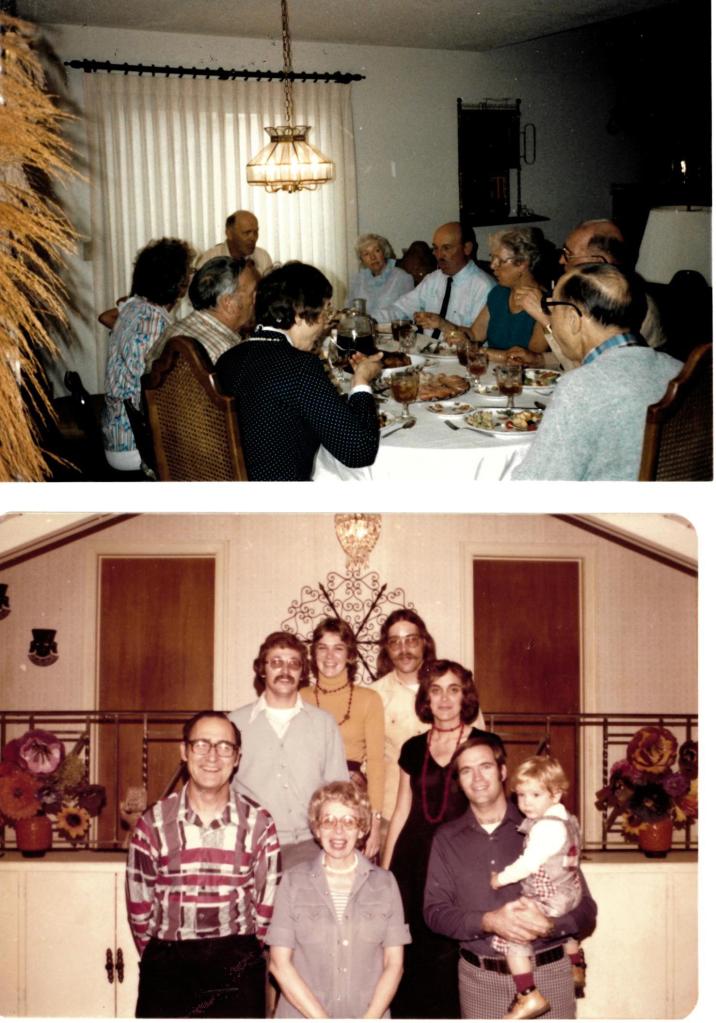
I lived in that house until I was fifteen. We then “moved up in the world” and purchased a much larger house in an older neighborhood that bordered the University of Pacific (UOP). My parents were able to sell their house in Lincoln Village and purchase a much nicer home that was split level, with mahogany hardwood floors, crystal chandeliers, four bedrooms, three baths, and about twice the square footage of our former home. My older sister was attending UOP and had been living in the dorms. She moved into an upstairs bedroom when we purchased our new home. My parents now had a house they could entertain guests, host dinners, and hold after-basketball game get-togethers for my cousin and his fellow basketball players from UOP. It was a perfect house for this phase of their lives.
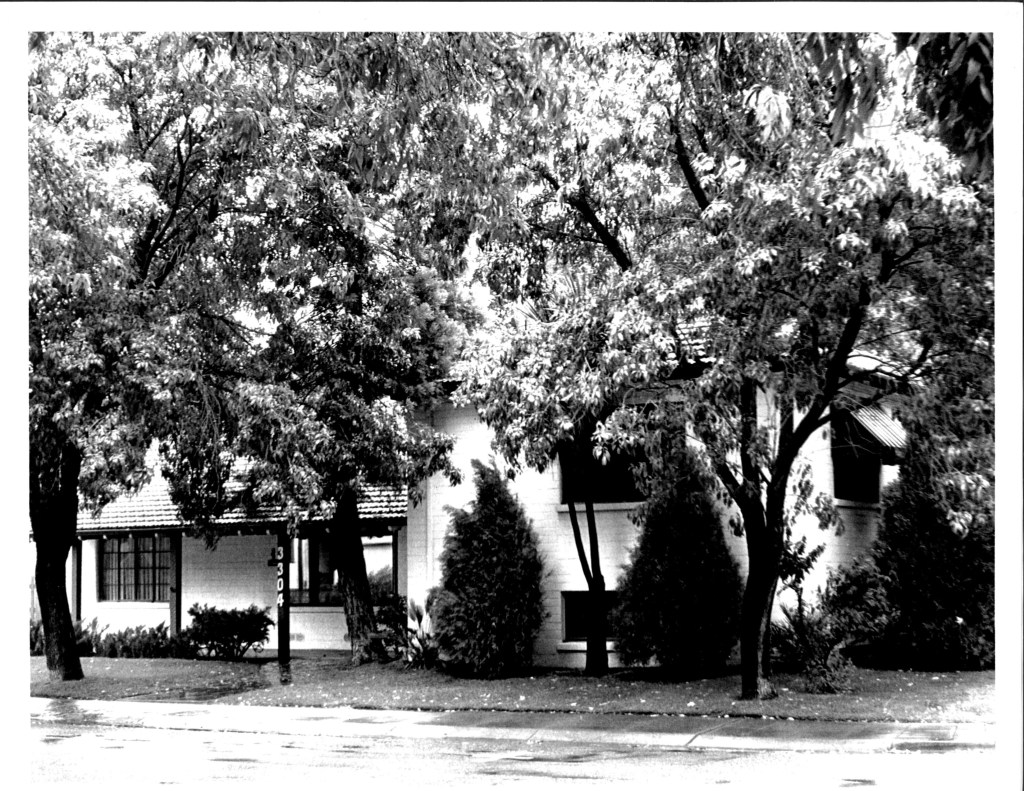
Our new home on Dwight Way was very different from the house in Lincoln Village. The lots were larger and the trees were much older and more mature. Each house was unique, unlike Lincoln Village which offered six to ten different ranch-style models. This new neighborhood had multi-storied homes with large back yards. Our new (to us) house was my mother’s dream home. Both my parents, and many of their family members, graduated from UOP. Being close to the UOP campus was a very large plus. My mom could now proudly host parties and receptions in their home. She was very pleased with our house and the image it projected. Being as I just obtained my driver’s license, the move worked out pretty well for me, as well. I shared a downstairs bedroom with my younger brother. This bedroom was the only one downstairs. It had its own full bathroom and was adjacent to the family room, bar, and a laundry room that had it’s own outside entrance. My parents traded the family piano for a 1958 Fiat which paid off their debt to me and provided me a way to get to school and get to all of my various high school activities. It was a good place to live out my last two years of high school.
Moving out of Lincoln Village and then working for the City of Stockton Parks and Recreation Department as a life guard really opened my eyes as to what a protected life I’d been living. Stockton as a whole is a pretty tough town. During the mid-sixties, cities would produce buttons that said, “I Love (Heart) (name of city).” People would proudly wear their “I Love SF” button. Or maybe it was “I Heart San Jose.” Stockton did a similar thing, but they knew this “love thing” wouldn’t work for Stockton. So, they had “I Like Stockton” buttons in hopes Stockton residents would wear them. During World War II, Stockton’s skid row was rated the second worst in the world, being beat out by Shanghai. I didn’t know skid row even existed until I was in high school. Stockton has a pretty diverse racial population. However, you would never know it in Lincoln Village. I did have a black classmate for about a month when I was about nine or ten. They soon left Lincoln Village, because I think they didn’t like being the only black family. A lot of the “villagers” didn’t like it, either. Of course being so young at the time, I wasn’t very aware of this. My first real experience with non-white people was at Oak Park Swimming Pool. I had a swim meet at this pool which was in the central part of Stockton. I was ten or eleven at the time. There was no roof and the cement floors were lined with wooden benches for changing your clothes. There was a window where you took a wire basket that had a number on it with a numbered pin you were to take with you when you gave them your basket with your street clothes. It was the first time I was in a public bath house and all I could focus on were all the older bare-naked black kids walking around and flipping people with towels. That was when I realized that I lived in a bubble. Later, when I became a life guard, I was first assigned to Oak Park. I later was assigned to McKinley Park which was in the heart of one of the roughest Black neighborhoods in Stockton. It was shocking to realize that I had lived such a protected life. I once rescued a young hispanic boy who went off the diving board, even though he knew he couldn’t swim. He’d been dared to do it. It was much worse to live down a dare than it was to risk drowning! I grew up in such a different situation, and yet we were located on two ends of the same town!
I have mixed feelings about growing up in Lincoln Village. On one hand, I had a care-free existence with plenty of friends, fields and levees to play in, low-trafficked streets that lent themselves to games in the street, and easy transport via bicycle. On the other hand, I lived a protected life that was free from a lot of society’s turmoil. It left me with a naive understanding of the world. I always felt that all people are equal and that it was horrible how some people were treated. I couldn’t understand why someone’s skin color would matter. I always knew that there were many who were not treated fairly, but I never actually felt I was somehow privileged because I was a white male. I thought, for the most part, that we had made great progress with the Civil Rights Movement of the 1960’s. In my mind, there had been rioting and fighting in the streets then, but that things were so much better now. That is, until I moved to San Diego at the end of my career and worked for a powerful black woman with strong opinions. We were born in the same year, but into vastly different cultures. She grew up in South-central LA and then Oakland. She was very intelligent, outspoken if needed, and blunt. We had a good relationship and we could talk frankly to each other, and she straightened me out about my own prejudices and misconceptions. I was lucky to have had Claudette as my boss and confidant, because she really opened my eyes to other points of view I hadn’t considered. I realized that things hadn’t changed all that much since the ’60’s, it just went more underground. I really hadn’t looked at the world as clearly as I had thought. On a whole, I feel lucky to have grown up in Lincoln Village. Having easy access to a public swimming pool with a swim team gave me and my siblings a chance to develop our swimming skills. This led to opportunities that directed the course of the rest of our lives. I’m not really sure I could proudly wear my “I Like Stockton” button, if I still had it, but I am very appreciative of the carefree childhood Lincoln Village afforded me.
 Swagerty-Aldrich Family Web Site