1890-1978

Stella, Emma, Wilber, Belle, Sampson, Elmer, Harley
While speaking with his seventh grandchild, Brian Swagerty, Elmer commented that he had lived through the best of time in history from horse and buggy times to man on the moon. Elmer was born in Fresno, California in 1890. He was the fifth of nine surviving children of 38 year-old father Sampson and 30 year-old mother Emma. Sampson. His father, also know as Clay. He farmed and was a blacksmith. During the family’s time in Fresno, Sampson made a huge bell for a local church. Sampson expected payment to support for his ever growing family. The church thought it should be a donation. That incident left bad feelings on both sides. Also close to this time the family home burned down. Because of the fire, few pictures survived of Elmer as a child. The family made treks to the photographer to faithfully chronicle their children throughout the years.
It was time for the family to move on. By 1900 they had traveled up to Grants Pass in Josephine County in Oregon. The last two children, John and Helen, were born in Oregon. Elmer finished up his schooling in Oregon but never finished high school as he was needed to work and contribute to the family. By 1909, Elmer was residing in Winnifred in Alberta, Canada and working as a lumber jack. He also took out a homestead grant through the Canadian government.
While working in Canada in the lumber business, Elmer was in a small accident that landed him in the hospital. While Elmer was recovering, he received visitors of fellow workers. They commented on another worker who had recently left because he felt it was just too cold. This comment brought out a good chuckle from the visiting workers. They were laughing because it had just begun to get cold and there were much colder times ahead. When Elmer left the hospital, he chose to move south where it would be warmer.
By 1910 Elmer is living in Yoncalla in Douglas County in Oregon. Here in Oregon he worked in the pear orchards. That same grandson Brian, was interviewing his grandfather and asked about the techniques used. Elmer remembered in Jackson County making small fires when there was a threat of a freeze to help the fruit trees survive the cold spell. They worked for a farmer who was willing to try out a new technique. The farmer had small piles of wood laid out throughout the orchard. He then hired teenage boys, such as Elmer and his brother Wilber, to finish the process. The teenagers slept in a barn and the farmer would wake them up at 2:00. They then would go to the orchard and set the wood piles on fire and carefully watch them throughout the night.
Wilber and Elmer had their own enterprise of helping wagons over the Siskiyou Pass. Various people would be traveling from Oregon to California or vice a versa and usually their horses were not strong enough to make it over the steep grade. The Swagerty boys had a good team of strong work horses and they would take the wagon over the pass while the family followed on the horses unburdened by the wagon. Elmer was known throughout his life as a hard worker.

By 1914 the Swagerty family had traveled south into California and ended up in Hughson, California. The story told to family members had Sampson and Elmer traveling in a wagon drawn by horses. They got as far as Sacramento and went into a new car dealership to check out the new contraptions. The wagon and team of horses was traded in for a new car. They were handed the keys and off they went. They made it as far as Hughson when the car had some problem that needed attention. I can only guess at the cause.Was it a flat tire or did it run out of gas? Who knows. We used to laugh that maybe that introduction to driving cars was why Elmer was such a scary driver throughout his life.
It was also on one of these trips by the family coming down from Oregon that Elmer had an accident that left a deep scar on his arm for the rest of his life. The family had stopped by the side of the road for lunch. Sampson made it clear to his sons that they were to stay away from the electrical poles along the side of the road. The poles were assessable to young spry teenage boys who were willing to climb them. Sampson knew his sons could be attracted to trouble. Sure enough, Elmer could not resist. He climbed up one of the poles and in the process slipped and his arm came in contact with one of the electrical wires. The shock threw Elmer to the ground and had cut his arm through to his upper bone. Elmer was more afraid of his father’s punishment for disobeying him than any damage to his arm. So Elmer said nothing and he swore Wilbur to secrecy. It wasn’t until later that the scar gave away his disobedience. Elmer was rarely wearing anything but long sleeve shirts. I had to hear the story as I never saw his scar.
On one of his drives in Hughson, Elmer got stuck in a dry gulch. Pearl Aldrich just happened to be driving by in her wagon drawn by horses. Elmer needed her help so she had her horses pull his car out of the gulch so he could be on his way. That fateful day started the courting of Pearl by Elmer. Elmer and his brother Wilbur would walk along the railroad tracks behind the Aldrich house. Pearl commented to her mother one day that those Swagerty boys really had a swagger. Pearl’s mother cautioned Pearl saying she would probably end up marrying one of them.
Pearl shared an upstairs bedroom with her older sister Lulu. Elmer wanted to go dancing and Pearl was not allowed to go to dances. Elmer put a ladder up to her bedroom window and she climbed out carefully and off they went to the dance. Pearl could have gotten away with her secret if her sister had not told on her. On November 26, 1914, Pearl Aldrich married Elmer Swagerty. Their attendants were Lulu for Pearl and Wilber for Elmer. One year and a half later Lulu married Wilbur.

Pearl did not finish high school but married instead. On September 23, 1915 their first child was born. When Pearl went to watch the high school graduation, she took her daughter Elsie. Pearl always said Elsie was her high school diploma. The family quickly grew with a new baby every two years.
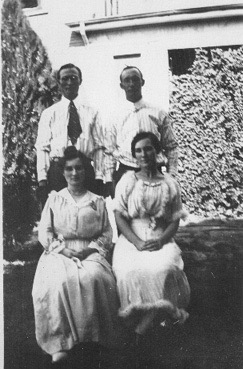
In 1917, World War I had been going for awhile. Elmer filled out his draft card that listed him as medium build and height. He had brown hair and blue eyes. At his prime Elmer was 5’ 10”. Elmer was not called into the war because he was married with two children and was a farmer. He was needed more at home. Elmer hired out as a hired hand to local farms in the Hughson and Turlock area.
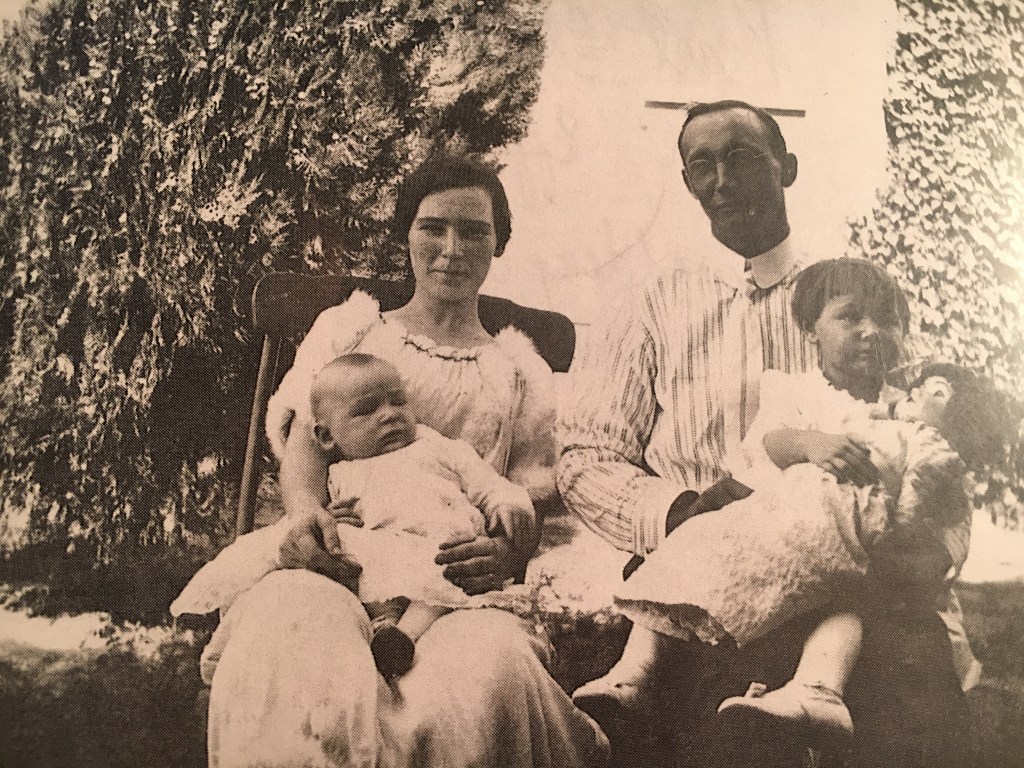
Elmer tried to create his own farming business in 1921. He bought up used farming equipment and then repaired them. With the equipment and a hired crew of relatives and friends they went to Tranquility near Fresno. His aim was to bring in the farmers’ crops with his crew and equipment and get a share of the profits. Meanwhile the family of Pearl, six year old Elsie, 4 year old Clem, 2 year old Floyd and several months old Darrell, lived in a used Shepard’s wagon. It contained a sleeping area and a small cook stove. The family was camping. After one season of harvest, Elmer realized his dream was not going to happen.
The family then moved back to Hughson where they moved in with Sampson and Emma Swagerty who still had their three youngest living at home. Also needing shelter were Wilbur and Lulu and their family of three children. My father Floyd remembers sleeping on the living room floor along side his siblings and cousins. Elsie wrote a diary and thanks to her we have a much better window into this family’s life. It was during this time that the fifth child and second girl Wilma was born. She only lasted nine months and died in this very crowded house.
Wilbur found an escape first. Wilbur went to his father-in-law A.L. Aldrich, to ask for money to help get his family on their feet again. Abe Aldrich suggested Wilbur take over managing the Aldrich orchard in Hughson. Abe and Ida then moved into town and had Wilbur and Lulu move into their home.
Elmer decided it was now his turn to ask for help. He went to his father-in-law with the same plea. Abe Aldrich had another offer for Elmer. Abe had moved to San Jose to accompany his two youngest daughters Ethel and Lucy who were getting a higher education. In an act of boredom, Abe had applied and gotten the job of manager of the Standish Ranch in Milpitas. Elmer started out as a foreman on the Standish ranch and then moved into being the manager and Abe moved on to another project.
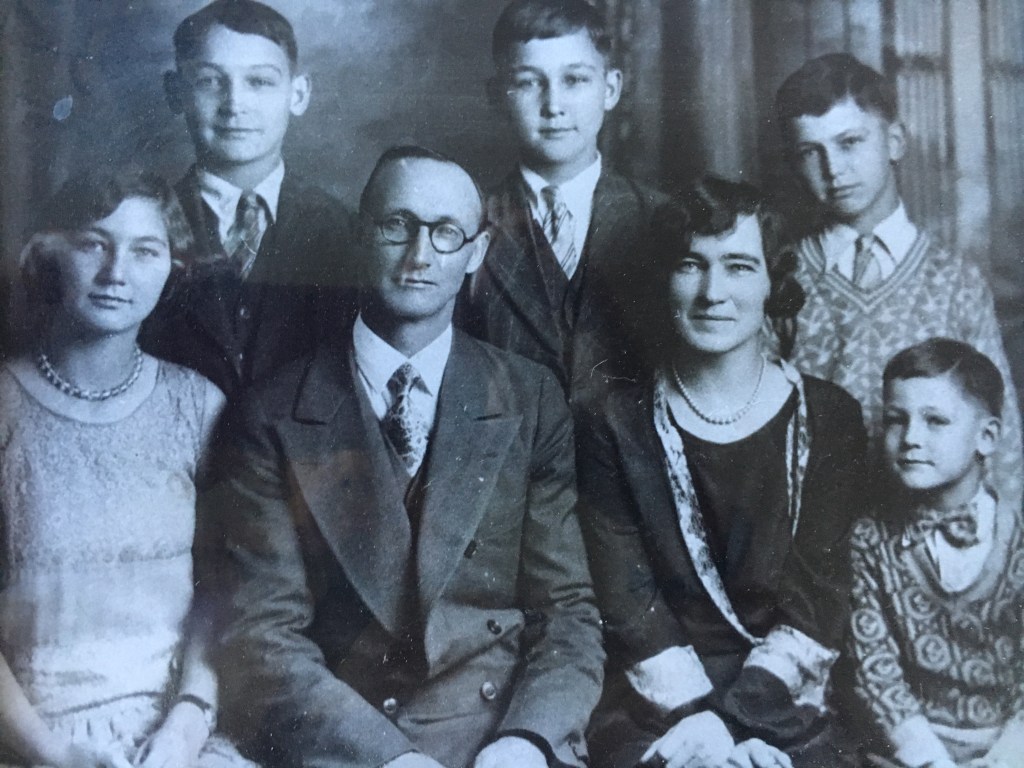
Elsie entered third grade from this new home on the ranch, and the rest of the family completed their education in Milpitas and San Jose. Elmer now had a steady job and the family flourished. Elmer started putting aside money so one day he could own his own land.
At a family reunion in the late 1980s, Clem and Darrell recollected memories from the Standish ranch. Darrell ended up settling his family in the area. Elmer was a strict father and very careful about gun safety. Each boy knew they had to follow strict rules if they came even close to a gun. The boys got involved in a small fight with some kids who’s fathers worked on the ranch. It involved a leaky boat and who had a right to use it. Somehow the Swagerty boys got the stupid notion they needed their father’s rifle and went into the house and got it. Pearl was busy with chores and Elmer was out and about with his job. The boys were convinced having a gun would win the argument. Possibly trying the gun by issuing a warning shot seemed like a good idea. By some miracle the gun jammed and the possible use was mute.
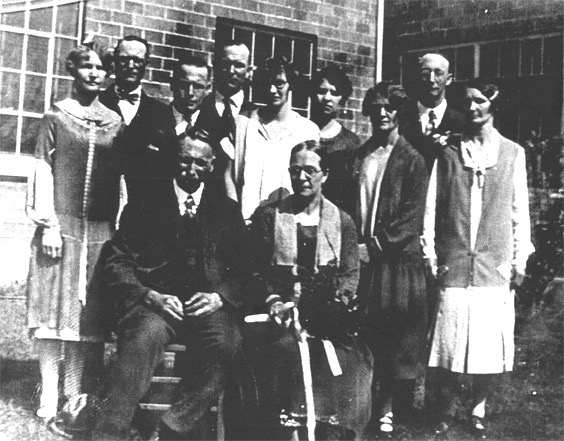
With Elmer’s strict routine concerning his gun, it was obvious someone had used it the next time Elmer went to use it. The four boys were lined up and whipped with a belt until Elmer was convinced he had made his point about never pulling that stunt again. Clem always got the first turn and got Elmer’s full energy. Floyd was next and got plenty. Darrell was sometimes spared as his mother would rescue him because he had been ill as a child with Rheumatic Fever. Jack learned that his father was rather tired by the time it was his turn and would yell extra loud to convince his father the punishment was full strength.
Family was important to Elmer and he made sure his family was not only well disciplined, but loved. He had had to babysit when he grew up. He felt it would not be fair to use Elsie as a built-in babysitter for all of her younger brothers. Of course that put a heavier burden on his wife, but he was careful not to over burden his oldest with babysitting. However she still had plenty of household chores. Elsie made the mistake of being born first as a girl. Elmer did not seem to know what to do with a girl. He was tuned into his sons. He was asked once how many children he had and he replied that he had four sons.

Finally in his 50s Elmer got to own his own land. He had saved up enough money to buy a small dairy farm in Escalon, California. At first, Pearl and Elmer lived in an old trailer that came with the property. Jack, the youngest son, lived in another dwelling and worked with his father. They grew alfalfa for feed and raised dairy cows. Part of being a successful dairy farmer is keeping your ratings up, so sanitation and the quality of the milk were always on their minds. The farm had a silo for storing the feed and provided a fun playground for some of the grandchildren at future Thanksgivings.
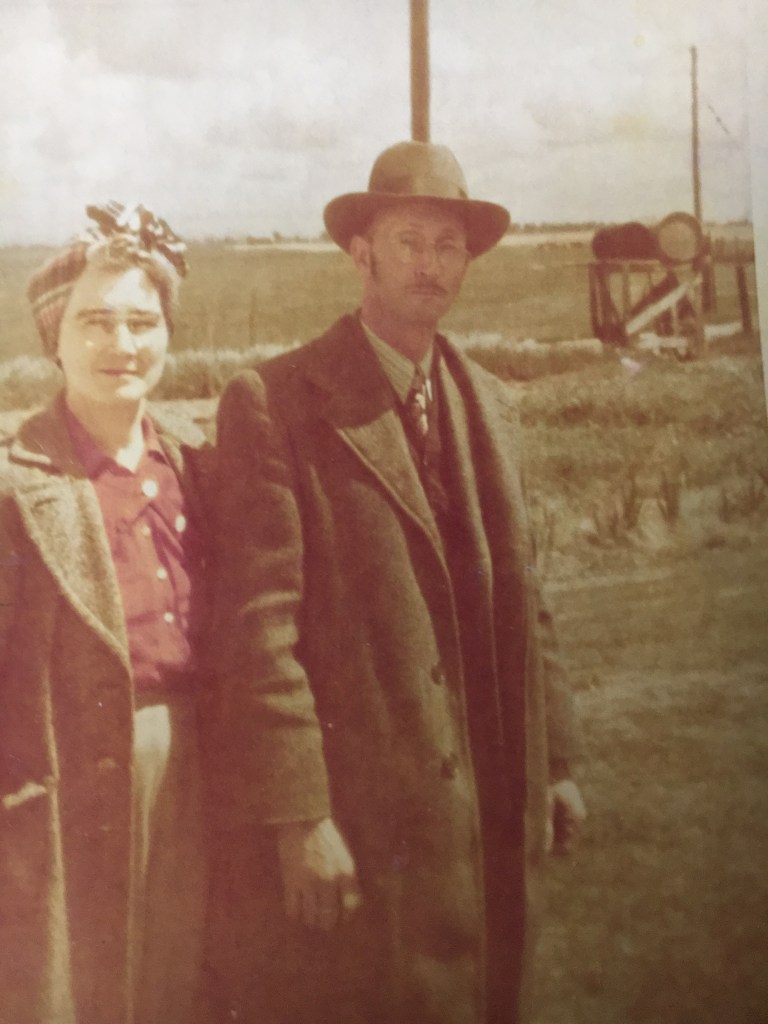
The actual owning of the property is not listed until 1944. Pearl had had to move from a decent house in Milpitas to a trailer supposedly for a short time. When that time in the trailer stretched on to longer and longer, Pearl got frustrated with her impossible situation. She went weekly to her mother’s home in Hughson to use her washer for the weekly laundry. On one such occasion it was obvious to Elmer that Pearl was taking more with her than just the usual laundry. She was leaving. Fortunately for Elmer her trip was stalled when there was something wrong with the car and she could not get it started. In trying to help her with the car, Elmer injured himself and needed some nursing help. Pearl took time to care for Elmer and had a change of heart about moving out. When she did travel to Hughson, eventually, she mentioned her frustration to her mother. Ida, her mother, decided it was time for Pearl to receive her future inheritance early. With the money from her mother, Elmer was able to build a decent home for them on the dairy.
Because it was during war time, supplies were limited. Also any building plans had to be approved and restrictions were placed on any new building based on the number of occupants. Pearl and Elmer only qualified for a very small one bathroom and one bedroom home. Her kitchen was also quite tiny but at least it had modern plumbing and electricity. Thanksgivings were always crowded, but that seemed to add to the charm.
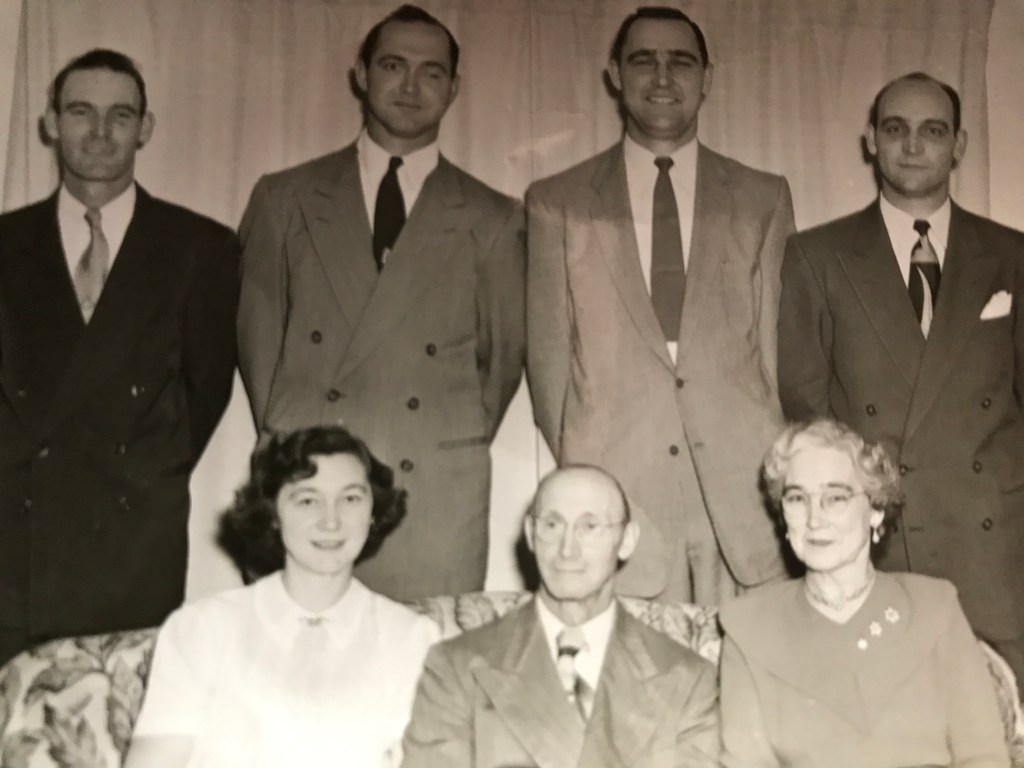
While living 42 years in Escalon, Pearl and Elmer became involved in the community. They were members of the Methodist church, Escalon Grange, the Farm Bureau, the Escalon Chapter of American Association of Retired People. Pearl was also a member of the Escalon Garden Club. They had 16 grandchildren and Thanksgiving was a huge event. It was at Thanksgiving and also other reunions where family stories were passed down. At times, Elmer’s brother Wilbur and Pearl’s sister, Lulu would join us. I witnessed Elmer being egged on by his sons to tell stories of his childhood. Elmer and Wilber got into their fair share of trouble and mischief. Wilber had since found religion and was reluctant to share such tales. Elmer enjoyed the audience and enjoyed making his younger brother blush. Other stories have been written about our Thanksgivings. As I did more research into the grandfather I knew growing up, I found a few tidbits that I had previously not known and found interesting. When Elmer was first eligible to register to vote, he was listed a Progressive. Wilber was listed as a Democrat and Sampson, their father was listed as a Republican. By the next registration Elmer is listed this time as a Republican as is Pearl. Politics were not much fun to discuss at Thanksgiving by the time I was observing as everyone in the room was a member of the same political party. The big discussion centered around which car company produced the best car.
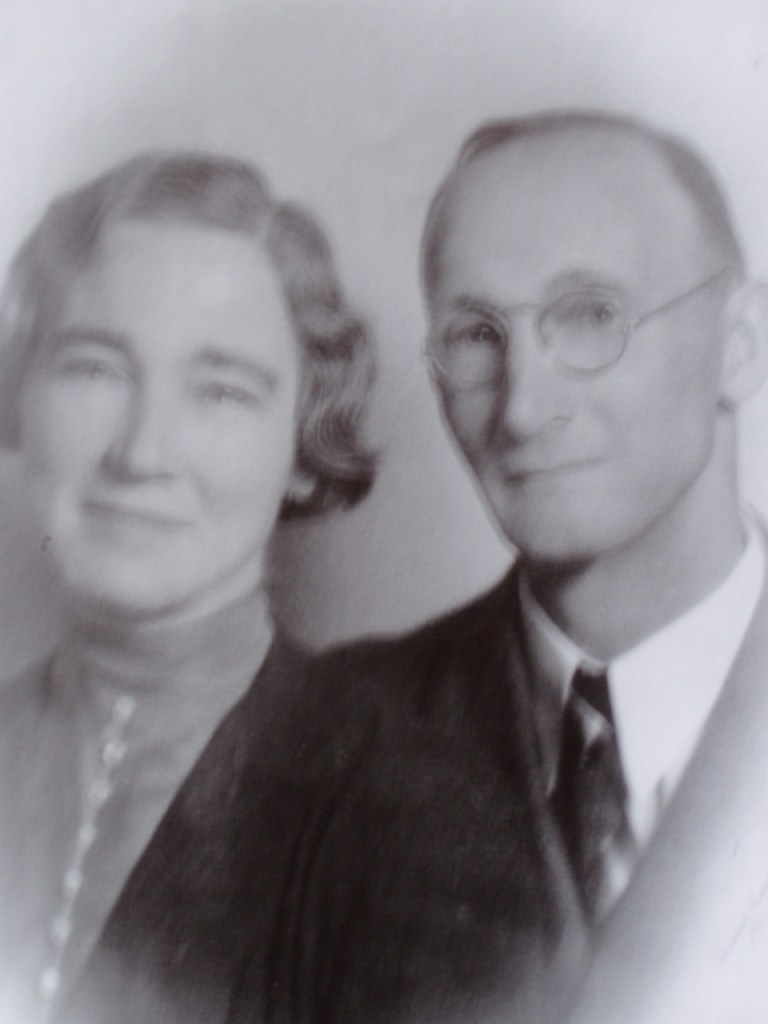
Another family topic was Elmer’s driving. He had several traits which made him a danger on any roadway. He was famous for riding his clutch. Having to replace the clutch did not seem to break him of that habit. He also thought it was very reasonable to drive the speed limit in the left lane. Many motorists took exception to that trait. Grandson Brian recalls a time driving to join a family reunion of Father’s Day in the San Jose area when he noticed Grandpa Elmer pulled over to the side of the road by a highway patrolman. Brian did a u-turn to find out if there was a problem he could help solve. When Brian arrived at the scene, it was obvious that Elmer was quite frustrated. He was so flustered that he did not even recognize his teen-age grandson.
Keith and Darrellyn for some reason were in a car with Elmer driving and they were traveling over a mountain pass. Elmer did not like having to turn so many times so he cut the turns by driving in the left lane as they went around turns. Fortunately there was little traffic at the time but two other grandchildren never forgot the terror of that ride. Grandpa had grownup driving horses attached to a wagon. To make a left turn, it is best to first turn to the right to allow for more room to make that left turn. Continuing this habit in a car on the highway caused confusion to any drivers following Elmer.
A fun memory Brian and I share was when Pearl and Elmer would drive in from Escalon and babysit us at our home in Stockton. One particular event stands out. Our parents wanted to celebrate their wedding anniversary and needed a babysitter. Pearl and Elmer volunteered and they arrived in the afternoon. Mom and Dad were going out to dinner and then a double feature at the movie theatre. Elmer and Pearl decided they needed to entertain us and that pulling taffy would be the night’s entertainment. We were having a grand time. All went well until Dad and Mom decided to not take in the second movie and came home early. They were greeted with groans because we were having a grand time and did not want it to stop. We were at the pulling stage of taffy making, and we did not want it to stop.
Grandpa went to extra effort one Christmas. He made a set of game boards, one for each of his children’s families. We received a Chinese checkers game board where he had carefully measured and drilled out all of those holes in plywood boards. The game became more special because he taught us how to play. The four of us, and sometimes Dad, really enjoyed that game board.
In 1965 his dear wife, Pearl, became ill with some rare blood cancer. There were only 13 known cases in the United States at the time. She ended up at Stanford University hospital while they tried various experimental treatments. Elmer was working as an irrigator for a farmer friend, Mr. Von Gahn. Elmer sold his dairy at age 80 and then worked as an irrigator. Pearl moved to San Jose to live with her daughter Elsie, who took care of her until she died. Elmer would visit on weekends.
I can remember the evening Elsie called our father to tell him that Pearl had died. She asked Floyd to call their father. It was a difficult phone call but not unexpected. Floyd, being the son who lived the closest, helped Elmer arrange the funeral and other necessary details that are required after the death of a loved one.
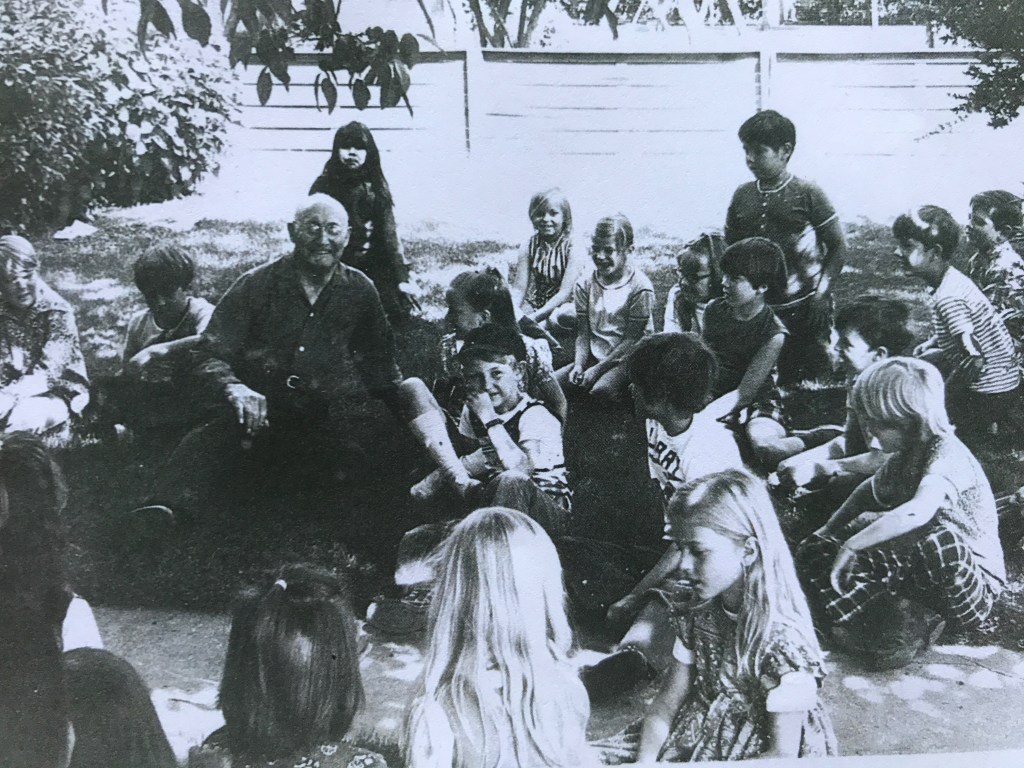
Elmer then properly did his one year of mourning. When the time was almost up, Elmer went to all of his sons, but not his daughter, and asked their permission to start courting again. He had a list of three possibilities. When the one year was up he went to the top of his list and started wooing Lillie Adams who had had the farm next to them when they both lived on Steirnagle Road. Lillie was now a widow and had been a good friend of Pearl’s. In 1967, on February 26, Elmer and Lillie got married in the Escalon Methodist church. Lulu Swagerty played the organ for the ceremony. Lillie owned a house in town and Elmer moved in. While I was teaching at Dent Elementary School in 1972, I brought my second grade class to the front lawn of their home to meet my grandfather. We were doing a field trip of the town and I included him as a local personality.
While teaching that one year in Escalon, I made arrangements to visit Elmer and Lillie every Thursday afternoon after I finished teaching. I stayed for dinner and heard many a new family story. At first Elmer did not want to bore me with old stuff. I assured him I was far from bored. I am so grateful I got that opportunity.
Lillie needed some operation and Elmer had had a few small strokes and shouldn’t be left alone. She made arrangements for Elmer to stay in a local care facility until she was recovered and could continue caring for him. Elmer called each of his sons and asked each one if they would take him home with them and get him out of that facility. Unfortunately each son was either out of the country, state or working full time. Bringing home Elmer, would have required a daughter-in-law to carry the burden. Elsie had taken care of Pearl and I do not think Elmer even asked her, as their relationship had always been strained. An attendant related later that he entered the room to do a routine check on Elmer. He heard Elmer take a deep breathe and it was his last. He died February 3, 1978, and the burial at Burwood Cemetery was on a very rainy day.
Elmer was a proud and stubborn man who was extremely hard-working. He was a product of his generation and his life on the farm was reflected in his beliefs and view on family roles and behavior. He may have lived during great changes in technology and society, but he also had to survive some pretty harsh economic times. Along with his wife, Pearl, they instilled a strong sense of family that carries down through the generations and is a part of his legacy.
3736 words
11/19/2020
 Swagerty-Aldrich Family Web Site