by Donna Swagerty Shreve
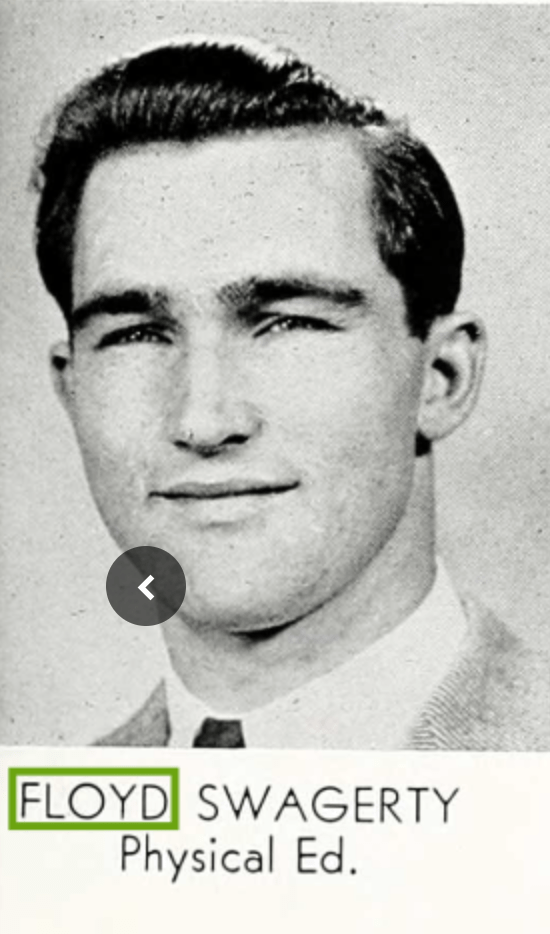
On July 12th, 1918 in Hughson, California. Pearl Aldrich Swagerty was trying to give birth to her third child in their small farmhouse. Her husband Elmer’s cousin assisted the doctor with what had become a difficult birth until she fainted and could no longer assist.. It was a home birth and labor had continued so long that Pearl’s health was in danger. The doctor turned to Elmer and said he needed to make a difficult decision. The doctor didn’t think he could save the lives of both the mother and baby. What was Elmer’s choice, his wife or his child? Elmer chose his wife.
The doctor went back to Pearl to figure out just where the baby was positioned so he could cut in the right places. As the doctor shoved his arm up to explore, he dislodged the baby’s arm that was up by its head. That was enough to let the baby be born to a very exhausted Pearl. My father, Floyd Elmer Swagerty, entered the world at 12 pounds. According to family lore, he rolled over at three days. Floyd was born 16 months after his older brother Clem and 19 months before his brother Darrell arrived. Elmer promised Pearl that after that difficult birth, any future births would be in a hospital. There would be three more births in the family.

Elmer worked as a farm laborer and he worked long hard days in the Hughson area. When Floyd was two years old, Elmer got the idea to try his hand at a big money making scheme. Elmer bought up some old farm equipment and took the family to Tranquility, which is now in Fresno. Elmer and his crew of nephews and hired hands would harvest farmer’s crops and get a share of the profits. The family stayed there from April to September. The family lived in a used Shepherd’s wagon. The wagon was pulled on sleds and contained a stove for cooking though most of the space contained beds as there were two adults and children ages 6,4,2, and baby in arms. Pearl had to maintain the household with no running water, sewage, garbage pickup, or electricity. Pearl hauled water in buckets small enough for her to carry to take care of cooking, drinking, bathing and laundry.

During this time, Clem and Floyd were playing and Pearl heard giggles and other noises that made her want to investigate. Pearl discovered four year old Clem and two and a half year old Floyd with sticks in their hands. They were forcing a snake to stay under their small wagon as they wheeled the wagon forward. Pearl was not familiar with snakes and didn’t know if this could be a rattlesnake or not. She tried to get the boys away from their game without frightening them without success. The boys were having too much fun and were not obeying. Fortunately a man came along the road just in time. He helped get the boys away from their game. It turned out that the snake was a king snake and an enemy of the rattlesnake. The king snake was now tolerated but the boys were reminded constantly to not play with snakes.

In late September, five months later, Elmer realized his dream could not work out and the family moved back to the Escalon area. They ended up moving in with Elmer’s parents in their small farmhouse along with Elmer’s younger brother Wilbur and his family of three kids. Floyd remembers lining up at night with his cousins as they all slept together on the floor wrapped in blankets.
Pearl had become pregnant in Tranquility and now gave birth to a girl, Wilma. The poor thing was born with various problems and only lived nine months. Floyd remembered his little sister as always crying.
While living all crowded all together with two other families, the little baby died at age nine months and a funeral was held at the house. There was no service in a church. The minister came to the house. The coffin was made at home and she was buried in the Escalon cemetery.
Times were hard for all in this Swagerty family and finally Elmer went to his father-in-law, A.L. Aldrich, to ask for help. The younger brother of Elmer, who had married Pearl’s sister, had already gotten help and he was now managing Grandpa’s peach orchard in Hughson. Grandpa Aldrich had moved to San Jose from Hughson because his younger daughter was now attending College of the Pacific in San Jose. His two younger daughters needed chaperones so he and his wife moved with them. Out of boredom, Grandpa Aldrich answered an ad for managing the Standish ranch in Milpitas. He needed to keep busy.

When Elmer came asking for help, Grandpa Aldrich handed over his job to Elmer and decided to find something else to occupy his time. The Standish ranch is where Floyd spent the remainder of his childhood graduating from San Jose High school in 1936. The family attended the Methodist church in San Jose and Sundays were spent in church, picnicking until the evening service and then returning home at night.
By now, there were four Swagerty boys. The Standish Ranch offered a huge playground. Halloween usually involved knocking over neighbors’ outhouses or other mischief. As a child, I enjoyed listening to my father and uncles recalling tales from their youth. Pearl had her hands full. The oldest child was a girl, Elsie, and she became her mother’s helper with the rowdy brood. An outside porch had walls added to it and made into a sleeping room for the four boys. Two boys to a bed allowed enough room for the beds. Elsie got the second bedroom to herself. Usually it would have been Floyd and Clem sharing a bed as they were the oldest and closet in age. However, Floyd was a bed wetter so the youngest son, Jack, got the honor of rolling over in the wet spot.
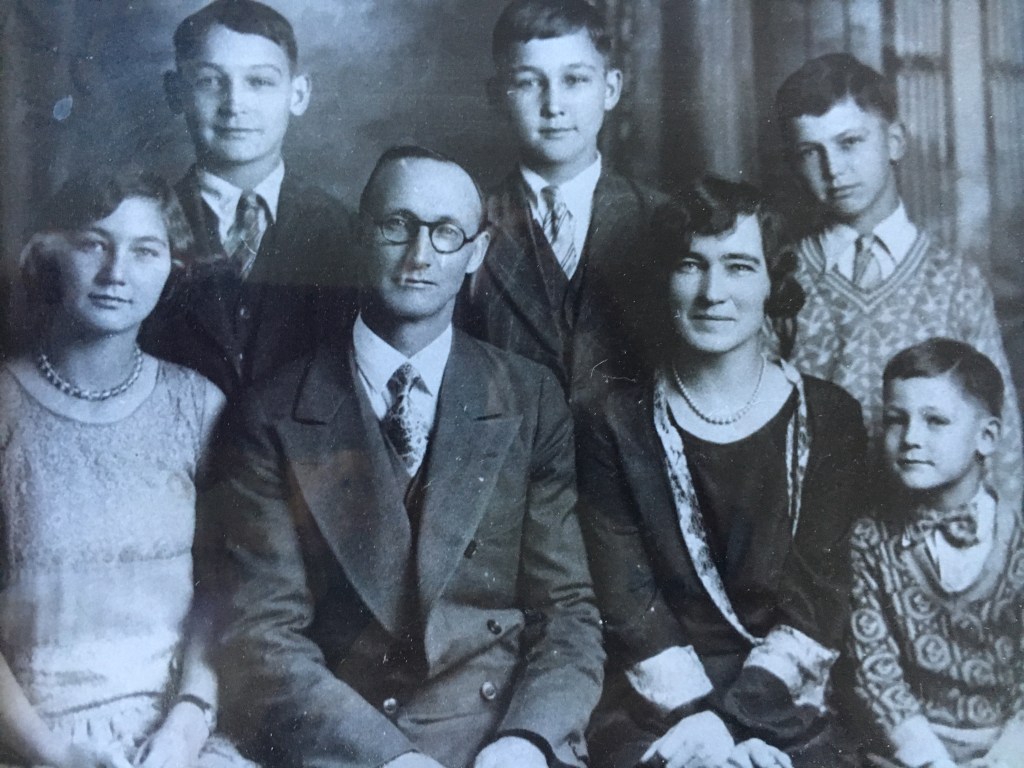
The parents were not aware of some of the boys’ activities until they moved out of this home. The boys’ room had many calendars, some in strange places, on the walls. It seems the boys would wrestle and fight leaving a new hole in the wall, thus the need for another calendar. One evening the parents were entertaining some company and the boys were suppose to be in their bedroom. Somehow, several of them snuck up into the attic. This was a well-known forbidden activity. Floyd slipped as he was walking on the beams and soon he was straddling a beam with his legs sticking through the ceiling to the living room.
Elmer was tough on the boys and punishment was swift and harsh. The boys had to line up and wait their turn to be beaten with his belt as they ran around with Elmer hanging on with one hand and beating them with the other. Clem and Floyd got the worse of it and Jack learned to yell real loud so Elmer would back off a bit. Besides, Elmer was usually tired by the time he got to Jack. Since Darrell had rheumatic fever as a child, Pearl would often rescue him from the harsh discipline. Over the years, his brothers would tease him about being rescued by their mother.
Living on a ranch brought about some harsh realities in addition to beatings by a belt. One of the ranch cats had just had another litter of kittens. There were too many cats on the ranch and the kittens would be a problem. Elmer instructed Floyd, who was about ten at the time, to put the kittens in a gunnysack along with a large stone and take the kittens down to the river to drown them. Floyd gathered up the kittens and headed for the river but when it came time to actually do the deed, Floyd just couldn’t do it. He returned with the sack of kittens to a disappointed father. The sack was then handed to Clem to finish what Floyd could not. Floyd then got a beating for disobeying. There was little room for softness.
Floyd and his brothers were dressed in bib overalls and had to help with the milking before they went to school. They wore the same clothes all week and on Saturday nights they got their bath. Floyd recalled he literally went to school sometimes with manure on his boots. He was a hick through and through. Clem, Floyd and Darrel lived in fear they would not escape to college in time to avoid staying on the farm. Elmer was saving up to own land of his own. When that time arrived, Elmer expected his sons to help him. The first three brothers made it out but Jack was left to help when Elmer finally got his own land at the age of 50.
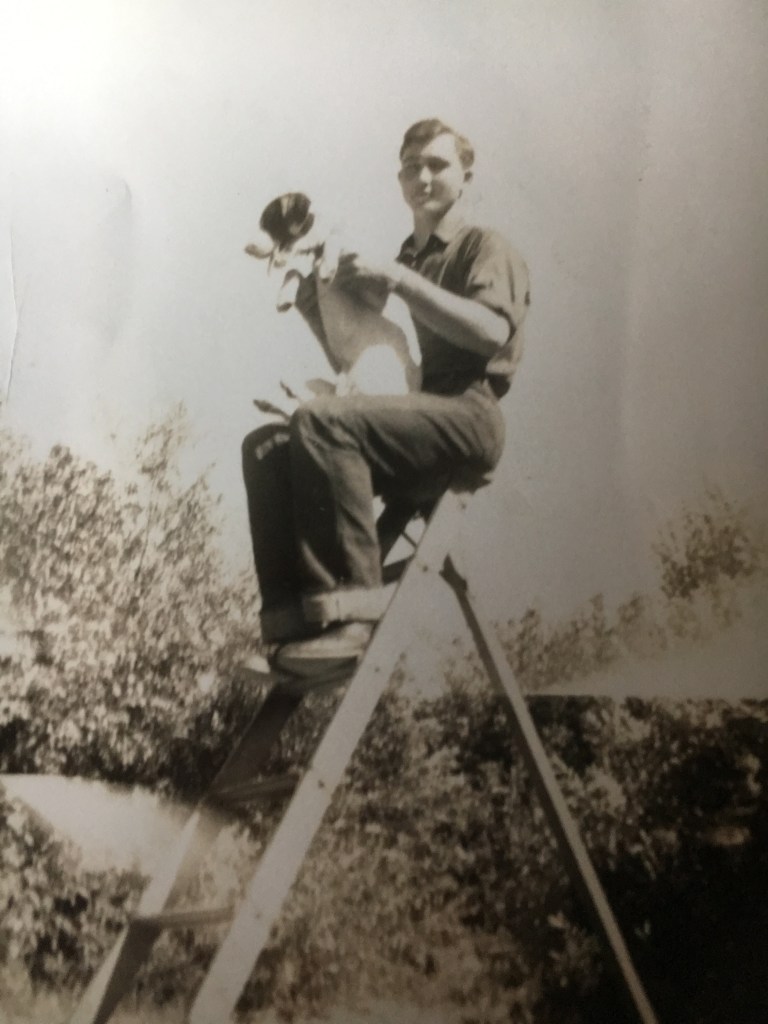
Floyd had grown taller than his older brother by age ten, eventually reaching his full height of 6 feet 5inches. Clem was one of the two shrimps at 6 feet even. When people would ask if they were twins, Floyd would reply yes, while Clem yelled no. Clem was the loud aggressive brother and Floyd followed along and was the mellow one. The Swagerty boys were known as big, tough kids and were sought after for sports in high school. Clem and Floyd and Darrell all played football. Clem’s talent made him a quick runner and became a running back or safety. With his build, Floyd was slower, steady and strong. He played guard and tackle. Football was not specialized teams back then and a player was expected to play 60 minutes of football.

First Clem and then Floyd got partial scholarships to then College of the Pacific which had relocated to Stockton, California. The third brother Darrell soon followed his brothers with the same deal. Full scholarships were not given out then and the boys had to do odd jobs on campus to pay all of their bills. Floyd was lucky enough to come to College of the Pacific during the Amos Alonzo Stagg era. He played football and majored in physical education major and minored in history
Floyd had always been fascinated with repairs and figuring out how things worked. When he arrived at college, he wanted to pursue engineering. A counselor informed him that he had not taken the proper classes in high school and didn’t have the required background to pursue such a career. We had a saying as kids around the neighborhood. Without hesitation, we boasted that our father could fix anything. For practical purposes we were correct. Floyd would have been a good engineer.
During the summer break from college, Floyd and Clem worked first on their uncle’s peach ranch hauling and stacking heavy lug boxes or later working in the cannery carting big lug boxes around. They stayed in football shape just by trying to earn money by doing hard menial jobs.
During college Clem and Floyd shared a car. The agreement worked fine at first as Clem was dating a girl who owned her own car. But when Floyd started dating Melva and Clem was now dating Effie, who did not own a car. Now trouble brewed. The plan to share the car every other weekend led to such arguments that when Floyd and Melva got married, Floyd did not ask his brother Clem to be his best man. Clem returned the slight several months later when he married in October. I do believe that story helped my oldest son chose his brother to be his best man, years later.
Floyd first noticed Melva in their shared class of History of Western Civilization taught by the daughter of the president Tully C. Knoles. Melva also worked in the dining hall where Floyd took his meals. Floyd was painfully shy and was convinced Melva was too popular to have any time for him. He would wait outside the dining hall by the drinking fountain and wait until Melva got off work. He would say hi and walk her one block to her dorm. This went on for longer than it should have according to Melva. Then one Saturday night Floyd got brave and called Melva in her dorm. He asked her out right on the spot. Melva had just washed her hair but said she would be right down. They soon were a steady couple.

Floyd continued to complete his classes for graduation and play football. In his senior year, he was injured by a head to head tackle and carried off the field on a stretcher to an awaiting ambulance. He had a neck injury that meant he was to now avoid tackles. He finished out his year being one of the trainers on the sidelines. As kids, we got taped for various injuries by an expert with plenty of experience.
Floyd graduated from C.O.P. in 1940 and went another year for his masters. By January 1941, Floyd and Melva were married, by Tully C. Knoles, in a small chapel, before the present day Morris Chapel was built. The wedding was small and attended by a few friends and family. They lived in a small apartment very near the campus and got their first cat, Tuffy. Things would have continued smoothly with both of them working but the United States was pulled into World War II by the bombing of Pearl Harbor.
Floyd immediately enlisted and was sent to Great Lakes Training Station in South Bend, Indiana. He was among 1800 midshipmen being trained to become Navy officers. Melva joined him and got temporary work until he was shipped out for his assignment. It turned out Floyd was named outstanding midshipman of his class. He now got assigned to stay in South Bend to help train the next classes of midshipmen.
For the first time in his life, Floyd gained a lot of self-esteem and was able to wear custom-made clothes that fit. For a time, they were a happy couple surviving the war together. Then Floyd got assigned to an aircraft carrier and headed out to Japan while Melva went back to California pregnant with their first child.
I was born in October of 1945 at Mare Island Naval base in Vallejo, California. Floyd had another three months to go before the end of his military commitment. Floyd’s ship docked in San Francisco on what became my birthday. Floyd’s captain told Floyd that is was silly to have him serve the next three months, as the captain knew Floyd was to become a father soon. Floyd was discharged and he hitch-hiked to Mare Island Naval base. He walked into Melva’s room with a three-day’s growth on his face and a dozen red roses for Melva. It was quite a surprise to all and it was said there was not a dry eye in the room.
The future now loomed ahead for the young couple with baby. They returned to Stockton so they both could finish up their Bachelor and Master’s degrees. Their first home brought them way out in the country on Plymouth Road. Today that very spot, where they rented, is quite busy on a frontage road of the interstate and is now considered part of the big city.
Floyd’s first job was as teacher/principal at Linden Elementary School. Years later an interesting story about Floyd was told to me by a former student. Floyd had her design a set to be used for a play the seventh and eighth graders were performing. She also became a regular babysitter and I remembered her fondly. She told me she had just returned from the Japanese internment camps after the war. Floyd made her feel like a productive human again. I thanked her for sharing such a precious story about my father.

After two years there, he moved across the street to the high school where he taught physical education and history. He also coached just about every sport offered. The family had now moved to Linden with a second child, Brian, in tow. With Melva’s encouragement, Floyd kept moving up and he moved the family again to Escalon where he was now the principal/superintendant of the elementary school. Jane had now arrived and the family settled into the community.
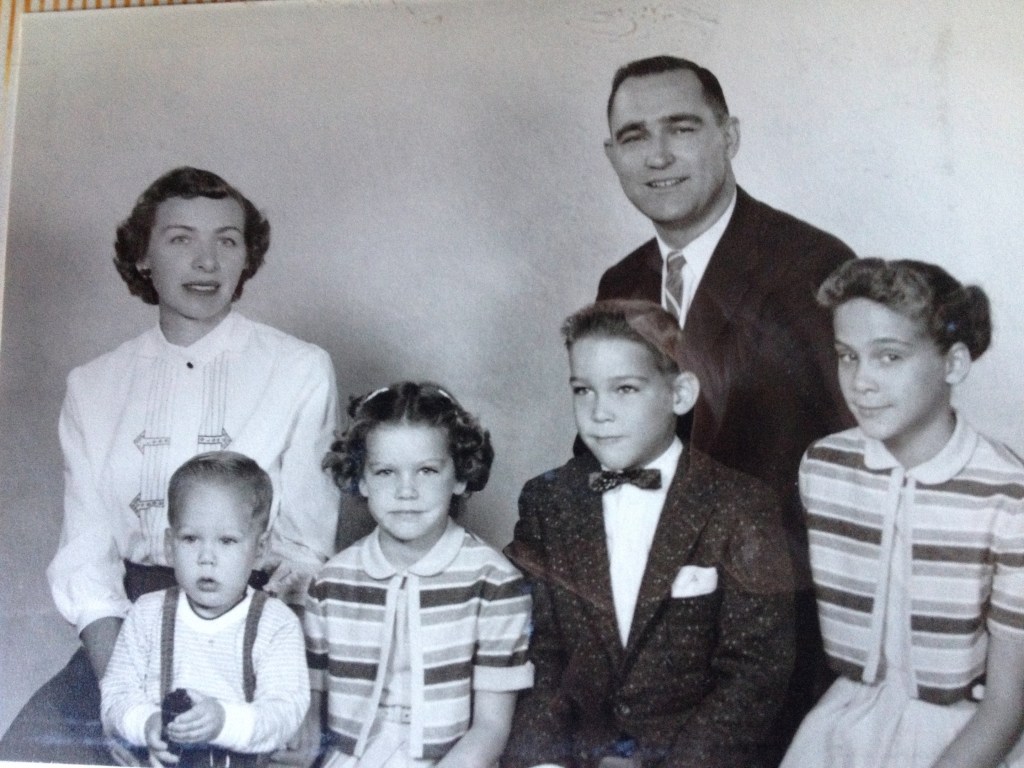
Again a better opportunity arrived and the growing family moved to Stockton where Melva and Floyd bought their first home. At this time Melva’s brother was living with the family. Ronnie helped Floyd with putting in the yard, front and back. There was also the fence surrounding the property. Meanwhile Melva made curtains and furnished the inside of the home with the help of Pearl, her mother-in-law.
Floyd and Melva had discussed having four children when they first got married but after the third child was born, Melva was tired. Finally Floyd talked Melva into just one more. He agreed to get a vasectomy after the fourth child and he also said he would get up and take care of the middle of the night feeding. Melva relented and the fourth and final child Grant was born in 1954 and brought home to the Stockton home.
Floyd had been hired to be the principal of Montezuma elementary school and ground breaking for the construction of Nightingale School. They later became part of Stockton Unified but were independent at this time. Montezuma was a mix of about 2/3 poor whites and 1/3 poor blacks. Tensions arose and fell and Floyd had his challenges. He held a whole school assembly and showed the Jackie Robinson story. He thought it was important enough that he brought the movie home and shared it with us kids. He broke all sorts of barriers by hiring the first two black teachers. The newly hired female teacher, felt comfortable enough to come into Floyd’s office and give him her advice. She said she realized what he was trying to do but she and her colleague were too light skinned and not accepted by the blacks in the community. He needed to search for a real dark black teacher. She even said he should try to find someone who looked like Aunt Jemima.
Floyd was attending classes at University of California at Berkeley and had access to more potential candidates than in Stockton. He found a very black second grade teacher. She dressed in the big petticoats of the 1950s. The children in her class loved her as she was like their fairy godmother. That teacher shared with Floyd some of the startled looks some of the white parents gave her when they came in for conferences and realized that the teacher their child adored was black. The children hadn’t felt it was important enough to share this description with their parents.
Floyd left that job to become principal of the new Lincoln High School. Our home in Stockton was chosen because it was in Lincoln School District. Floyd and Melva had done some research on the various school districts before they bought their home.
Lincoln High School in 1957 was housed on the University of Pacific’s campus in Owen and Bannister Hall. Floyd took the job knowing a new campus was being planned in Lincoln Village. He took on the challenges and finished out his career in Lincoln Unified.
Floyd had continued his education and was working on his doctorate at the UC Berkeley. He did all of the classes and all he had left was his thesis. It would entail taking off a whole year from working. As the bread-winner of a family of six, he just couldn’t justify the sacrifice.
He did interview for other jobs that would mean a move to another town. I remember becoming nervous whenever he went off for each interview. He interviewed close to where he grew up and was shocked to see how modernization had changed his hometown Milpitas area. He decided he didn’t want to raise the family in such a big city atmosphere. He received another job offer in Williams, which is an hour and a half north of Stockton and just off I-5. He took Melva with him for the last interview with the board and the signing of the papers.
Melva stayed in the car while Floyd went into the school and down the long hall to sign the contract. Floyd remembers having a shoe that squeaked as it was worn and needed replacing. He signed and returned to the car. Melva was quite distraught and begged him to return and refuse the job. Melva had decided she just couldn’t live in Williams. Floyd returned with his squeaking shoe warning the board he was returning. Floyd gave his apologies and had them tear up the just signed contract. To this day, as we travel north on I-5, I thank my mother for saving us. I would have had to transfer to Williams for my last two years of high school. Floyd accepted that his advancement was not worth moving his family.
Floyd ended up being Assistant Superintendant in Lincoln Unified and served under several different types of bosses. His last several bosses did not like doing the budget or supervising classified personnel. Thus Floyd finished his career with these responsibilities. He made the most of it.
Floyd had been principal of the high school while I was a freshman and sophomore. As the family only had one car, I would visit Floyd’s office on many occasions to use the car to drive a sibling somewhere after school. His secretary would not always know where he was and I would have to go exploring to find him. Once I found him up on the roof of a building helping some custodian with some problem he thought he could solve. Another time he was helping someone fix a sprinkler. Floyd was not afraid of getting his hands dirty or fixing a problem he could solve. No work was beneath him.
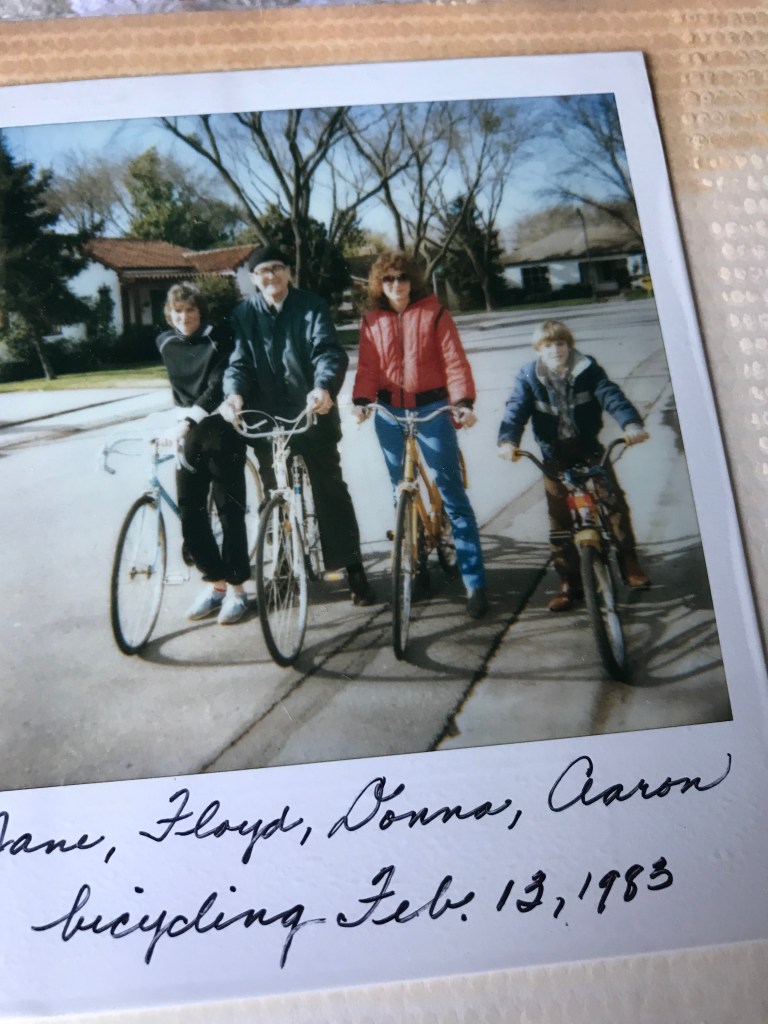
Teachers have told tales of how Floyd helped them with getting shelving in their closets or finding some item that would help in their classroom. Floyd had to remind some janitors that their job was to help the teacher and not to complain about the room arrangement. If all else failed, I could stand real still in an area where he had headed and listen for his big booming laugh. He was popular with the secretaries, as he would adjust their earrings for them so they fit better.
Floyd carried with him a huge ring of keys on his waist- band. When he bought his suits, he had to buy two pairs of pants as he wore –out his pants before the suit was ready for the rag pile. Another teacher told me a tale concerning keys. At that time, few individuals possessed a master key. One of those people was this special education teacher who worked out of a converted old bus barn in a side parking lot. Due to his job description he needed access to several buildings. Carlin had lost his prized master key and Floyd had to have the campus rekeyed at some expense. Later Carlin went into Floyd’s office to ask for some item to be put in the budget. Floyd had a very open door policy. After pleading his case, Carlin went on his way.
Later in the day Carlin was teaching a class in the converted bus barn. Floyd walked into the classroom door and with his big booming voice said, “You left these on my desk.” Floyd then threw a very accurate pitch across the room where the keys hit the front desk, landed and then slid into Carlin’s body. Floyd then turned and left the room.
Several stories surfaced after Floyd died. One of my favorites concerned his hiring of Mr. Overton to be a janitor at Montezuma School. Frank Overton was a black man down on his luck and he desperately needed a job to support his family. Floyd had a unique interview style and he found out many things that are illegal to ask today. Floyd not only hired Frank but he loaned him money until he got his first paycheck. Melva had no idea until years later. From then on there became a family tradition in our house. Every Christmas Eve, Frank Overton would give Floyd a call and check in with him. This yearly call continued until Floyd died. Frank Overton attended Floyd’s funeral service with his entire family.

When Brian was 17, he went with several friends to Mexico without any parents’ knowledge. Because several of them were not 18, the Border Patrol turned them around and then notified the parents. Floyd received the letter and Melva never knew its contents as it was addressed to Floyd only and she never opened his mail. Floyd chatted with Brian in the backyard away from listening ears. After Floyd decided it was a silly young man adventure, he dismissed it. He said to Brian, “We don’t need to tell your mother.” Brian was in complete agreement.
Another story emerged from Bill that knew the family from the world of swimming. We had attended many swim meets together. Bill went to college on a football scholarship and had to give up swimming. Bill went on to play professional football for a few years with his huge and tall athletic body. As high school sophomore, Bill and three other boys were called into the principal’s office as they had been caught doing some stupid prank. They waited in an outer office while Floyd called them into his office one at a time. This occurred in the 1950s and discipline was handled differently then. Bill was called in first. Floyd grilled in him in his signature way and got a full confession. Floyd surmised that Bill had gone along with the prank and another boy was the ring-leader. After hearing Bill’s answers, Floyd got the huge board of education from the top of his file cabinet. Bill was in mortal fear at this point. Floyd then told Bill to yell real loud as Floyd hit the side of the file cabinet. Bill complied and when the door was opened for the next victim, there were stunned faces and a relieved Bill.
Bill had described sitting n Floyd’s office observing Floyd’s folded hands resting on the desk. Bill claimed those huge hands were at least a foot tall. This was coming from a man who grew to be at least two inches taller and many pounds heavier than Floyd. Bill went on to play professional football for a few years with his huge and tall athletic body.

As children growing up, we were convinced there were no secrets between our parents. They were a solid wall. We knew they would back up each other in various decisions that were made. Therefore, when various secrets emerged after Floyd died, we were quite surprised. He was always very quiet about his good deeds but they did not go unnoticed.

With Melva’s pushing, the family moved from the smaller home on Calhoun Way into a much larger home on the corner of Dwight Way and Alpine Way near the University of the Pacific. The family now had 3200 square feet of room. The house had a low price and needed a lot of renovation. Floyd was quite handy and he was able to fix and solve the house’s many problems. When it came time to paint the outside of the house, Floyd won the argument and did it himself. Melva wanted to hire a painter because she thought the neighbors would look down on them for not having a professional do the chore. Floyd insisted and the neighbors stopped by and said they were so impressed that the new neighbors were willing to do the repairs and painting themselves. Floyd was not concerned about public opinion if he felt he was doing the right thing.
Now that the family had settled into their dream house, the children started to leave. I was the first to leave. After college graduation, I followed my husband east while he served in the Coast Guard Band in Connecticut for four years. Then Brian left for college in Oregon. Then Grant, the fourth child, was killed in a car versus bicycle accident. In one and a half years the huge house was down to one child. Floyd went through the “normal” grieving process and openly cried as the various events proceeded. Melva kept up appearances and never broke down, at least at first.
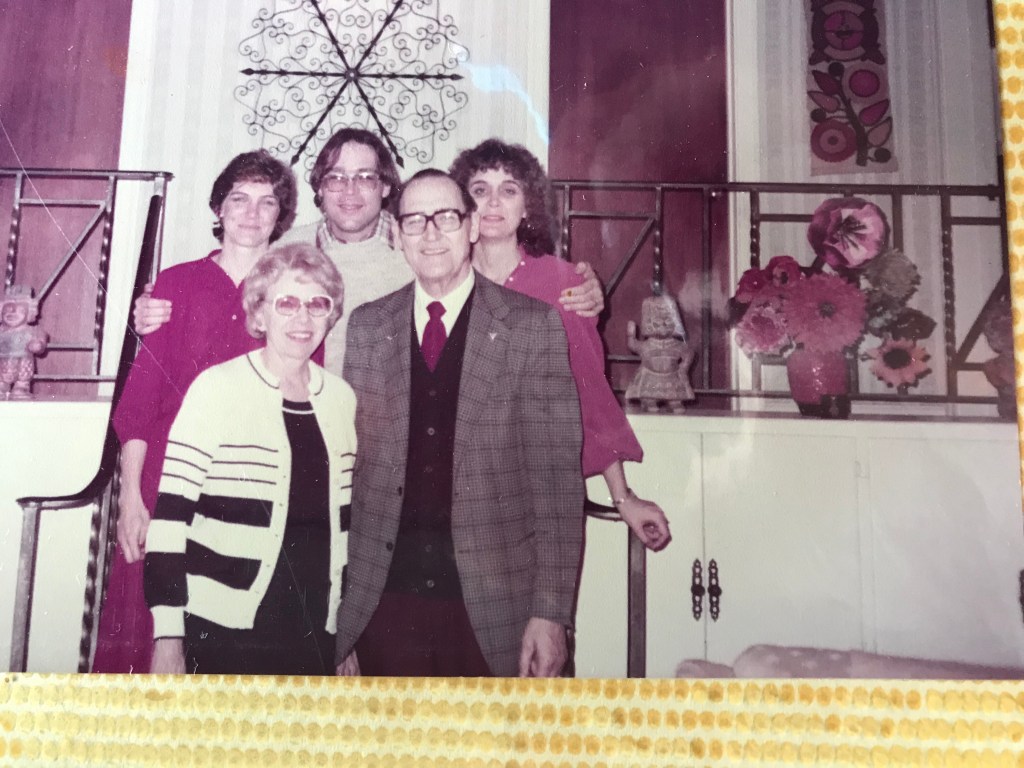
I flew home from Connecticut for the summer to teach swim lessons and stay with my parents as we all grieved. At this point Melva would break down several times a day in grief. I was alarmed and finally said something to her, as I had never seen her like this before. Dad took me aside and said each person grieves differently and not to add to Mom’s problems and to leave her alone. Later Mom admitted she was suicidal but what prevented her from doing anything was her dilemma of how to hide her body so Floyd would not have to identify her. Floyd was upset that he was not enough to keep her around. This was the first time I had ever witnessed any tension between my parents. They had a very strong relationship that worked for them. A very high percentage of couples do not survive the death of a child but my parents did.
During the year of Grant’s death Floyd and Melva started opening their house to foreign exchange students. This new chapter in their lives just seemed to happen. Various people from a variety of countries became part of our extended family and we were all enriched by the experience.
In 1979 Floyd retired from Lincoln Unified and started his plans for his retirement. One of the activities he wanted to explore was painting. He had always been fascinated by his sister’s attempts and he wanted to try his hand at it. Melva and Floyd also wanted to travel. Melva would plan the route, the accommodations and places to take in meals. Floyd was content to follow the route she planned and enjoy the adventure.

After only one year and half, Floyd was diagnosed with prostate cancer. Now all retirement activities were put on hold while he started his battle that he would lose four and a half years later. Floyd was a fighter and did all of the treatments recommended and started a very strict diet that could help his body fight the cancer more effectively.
Floyd had not finished traveling, however. The first trip they took was to Australia where three former foreign exchange students lived. Floyd had just had an operation and was told it would alleviate his pain. Unfortunately that was not the case. Floyd was quite a trooper and went through all of the activities he could possibly do without complaint.
Once summer arrived he wanted to travel three and half hours up to where Brian, the second child, lived with his family. Floyd recognized that his relationship with Brian was strained due to Brian’s conscientious objector status and Floyd was missing out knowing his grandchildren. Melva did not want to drive up to Redding and stay over night in Brian’s crowded home. I volunteered and was available to drive if Floyd needed relief. The three and a half hours gave the two of us a great opportunity to talk and I realized that I could talk about anything with my father and not be judged. Floyd was a prime example of unconditional love.

Floyd was bringing up a playground set for the children and Brian and Floyd set it up and it gave them a chance to mend some fences between them. Brian’s children usually only saw this grandfather at Thanksgiving when there was a huge crowd.
The last major trip Floyd took was by himself. This time Floyd was flying to Connecticut to see a Japanese man who had created a special diet to help deal with helping the body heal or fight a major disease. When Floyd met with the guru, the man said, “Why did you wait so long to see me?” There was no miracle cure for Floyd.
My role in the family as Floyd slowly died was to listen to him as he talked. Floyd wanted to discuss so many aspects of his condition and I realized I would do anything for this man. Floyd said his greatest regret would be not being able to watch his grandchildren grow up.
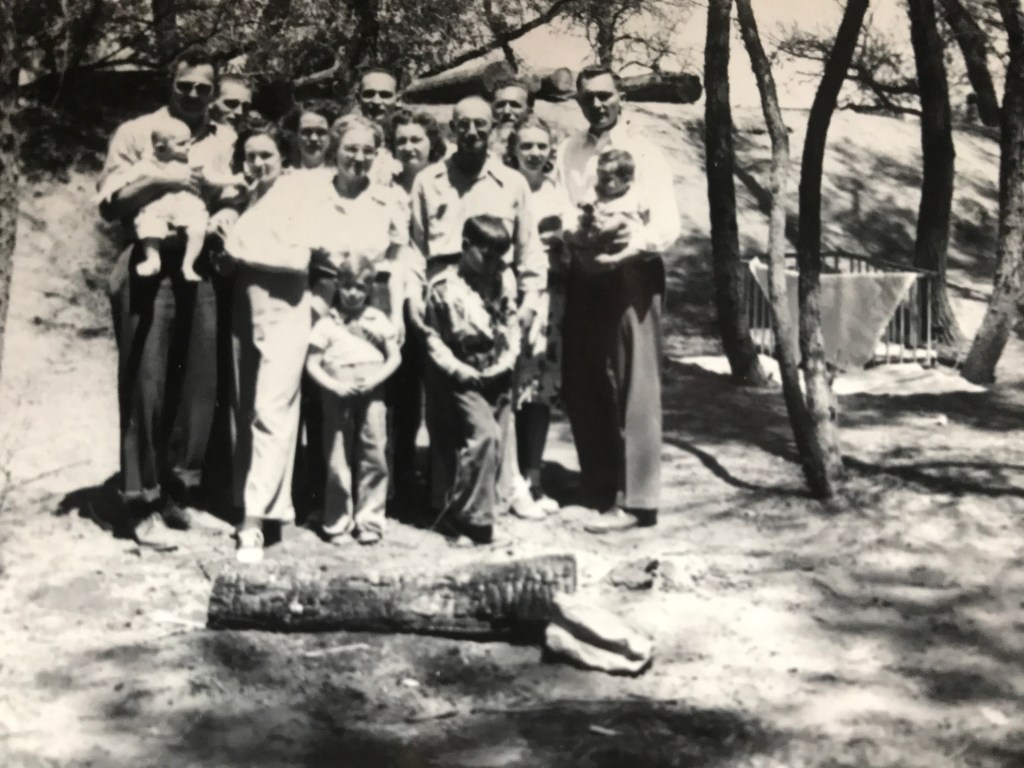
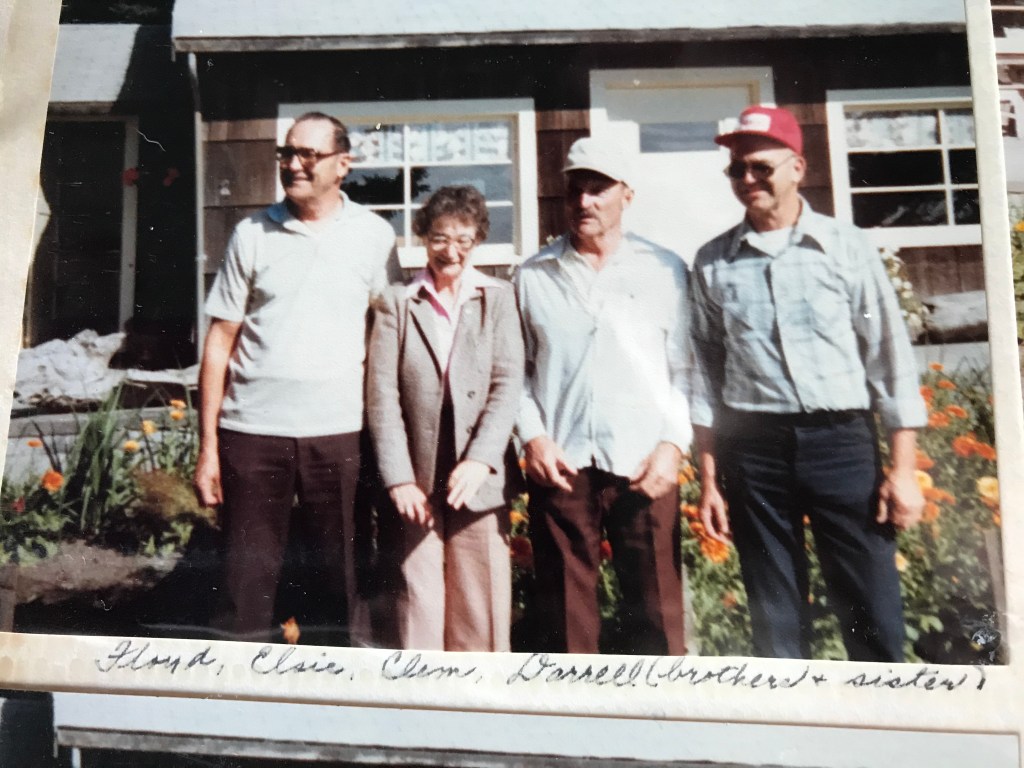
Three weeks before he died, Floyd’s siblings and their spouses gathered at the condo and had lunch and goodbyes. There is a picture of the event with all ten of them. It is evident from the photo that Floyd is so ill. He had been a six foot five inch man weighing 235 pounds. His death weight was 165. The weight was that much because Floyd had such huge and dense bones.
Before his death, Dad asked me to go to five different individuals to speak at his funeral. He had chosen five people that would represent various aspects of his life. I had to go each person and ask them to participate in the service. His sister wrote her comments down and had the minister read her comments as she knew she would not be able to get through it herself. Dad also chose Henry Metzler who had been a student of his at Linden High School plus had played sports and had been coached by him. The next two people were Jonathan Pearce who was a colleague and family friend. The other professional choice was Tod Anton who had been Dad’s last boss who became a good friend. Tod came by once a week to visit with Floyd and catch him up on the lastest district events during his last year. The last person was Donald “Bushy” Crump who was a fellow Rotarian. Floyd had chosen well and Morris Chapel was over flowing. Floyd found Gary Putnam as the minister for his service. He had met Gary in Rotary and had been impressed.

Floyd also had tried to take care of any loose ends so Melva would be set up as best as possible after he died. With this thinking, Floyd and Melva moved from the big dream house and moved into a much smaller condo. Floyd set up Melva with a new smaller car so she wouldn’t have to deal with car repairs for a while. Floyd actually apologized for dying so soon and going first. He knew his wife would have difficulty handling being alone.
I remember talking to Dad while he was in his last few days. I told him he had set a great example of how to live a good life and now he was teaching us how to die with dignity. His wonderful patient nature has been passed on down through the next generations several times.
 Swagerty-Aldrich Family Web Site