
1874-1961
by Donna Shreve
My mother Melva Boone Swagerty shared many stories that she heard from her father Jesse Sylvester Boone. He grew up in an interesting time and was proud of his heritage. He tried telling many more stories to his daughter but she usually cut him off with “That is boring.” Later she shared that she wished she had listened more as now in her later years, she wanted to know more about her family. The one story that stands out from the rest was when Melva came home from school to find her father on his knees sobbing before their burned-to-the- ground house.
Jesse Boone became the ninth child born to 46 year-old Milton and 39 year old Ann. They would continue to have three more children. Jesse ended up being one of three surviving sons who grew up in Fabius, Missouri. The town is no longer an official town as the post office was removed in 1935. Fabius is located in Knox County near the town of Edina. In 2010 the population of Knox County was just over 4,000.
Jesse attended the local Millwood Church and local one room schoolhouse. He finished his education with eighth grade. His two children went on to graduate from college. Jesse’s father Milton Boone had married Ann Cunningham and they received her wedding present of 80 acres of farmland. The sons of Milton and Ann had to figure something else to do to sustain a living besides farming on the family farm. The girls, of course, were expected to marry men who could take care of them and family.
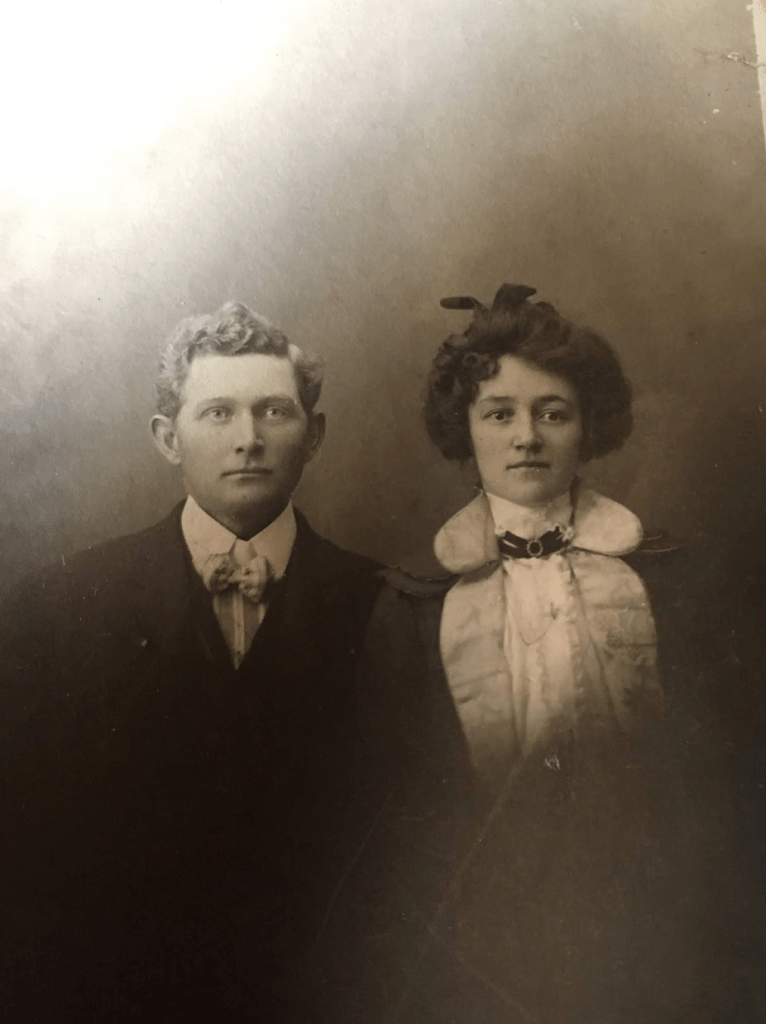
On September 16, 1896 in Missouri, twenty-two year old Jesse married Sarah Maggie Longfellow. Jesse felt a need for a better job opportunity and in 1897 they moved to Anaconda City, Montana along with his younger brother Lafayette, so he could work in the Anaconda Copper Mining Company. The company had been in operation since 1881 and was first used as a silver mine until large deposits of copper were discovered. Both brothers earned enough money to move to White Cross, Idaho in 1904 where they both bought 40 acres of fruit orchards.
After 22 years of marriage, Jesse was quite anxious to remarry to a cute young thing and willing to do whatever it took to cut loose from Maggie. Maggie and Jesse had never been able to have children and I wonder if that was part of the estrangement. Of interest to me, was their marriage certificate. It listed Jesse as 39, instead of 44, and Virginia as 22, instead of 18. This was not the last time Jesse lied on an official document.
Jesse borrowed money from a local undertaker, Clyde Summers, in Boise and bought a dairy farm he named the Early Dawn Dairy. I have a photo of the dairy that shows the main house, creamery and barn. Virginia is standing by the house and Jesse is standing between the barn and creamery. There was a set of tracks that ran in front of the property where milk could be transported into town. According to the 1920 census there were several workers who lived on the property to run the dairy. The workers included: Virginia’s father, mother, her sister Nola, her husband, and their son Roy. There were a few other non-family members. Jesse had quite a pay roll on this dairy operation.
Jesse started out with horses that were well trained to stop the milk wagon at the end of the block while deliveries were made to the various customers. Jesse then switched to trucks just before a small crash of the market in 1924. Jesse had borrowed money for the three trucks and when the bank wanted its money, Jesse lost the farm as he had over extended. Ironically, he was short the same amount of money he had used to settle his divorce with Maggie.
After six years of marriage, Virginia had had enough. Jesse, her husband, had paid for her to go to Portland in 1924 and train as a beautician. While in Portland, it seems Virginia spread her wings a bit. During this time two letters were produced that enabled Jesse to divorce Virginia. One letter was a love letter to her lover. The other letter was from Virginia to a friend. Virginia stated that Jesse was a very good man but emphasized that she was only young once. The twenty-six year age difference became too much of a problem. I am guessing Virginia supplied Jesse with the incriminating evidence so Jesse could divorce her and set her free. The words “You are only young once” haunted me and made me realize Virginia’s main priority was not raising her two children.
Years later Melva, her daughter, was shown a picture of Ronnie, her brother and herself at age 4 and 6. It was a studio picture taken just as Virginia left them. We saw this picture while visiting newly found relatives in the Boise area when Mom was 81. Mom looked up to me, as she was seeing the picture for the first time. “How could she leave us?” I ask the same question.
Jesse had now lost his dream farm and young wife. He had taken what little money he had left and bought a lunch counter in Boise. He was working as a short order cook and owner of a small fast food style diner he named the Filling Station. Jesse would build up the business enough to sell for a profit. He would then take his two kids and move to the next town. Each time he had a bit more of a profit. Jesse’s goal was to save enough money to own some land again.
I finally had Mom give me a timeline of her childhood. Mom had mentioned that she never felt at ease inviting any friends over to her place. She lived in a small apartment type dwelling behind the lunch counter. She was also always the “new kid” and if she did make a friend she was soon moving to another town. She and her brother became each other’s playmates and best friends. When it came time to buy clothes, Mom was sent with a waitress or one of the 16 housekeepers Jesse hired over the years. Mom became very observant of styles and how to fit in. She would just show up at the latest school with Ronnie in tow. She never remembers her father coming with her. Her father did not attend any school activities and Mom learned to be quite independent.
She went to four different first grades: twice in Vancouver BC, Eugene, Oregon and Portland, Oregon. In Tacoma, Washington she attended second grade and part of third grade. In Seattle, Washington her father had a succession of three different lunch counters. One of the lunch counters was in Ballard, Washington near the docks. Towards the end of fourth grade they moved to Oroville, California.
In Vancouver in 1925 when she was six, Mom remembers her parents getting back together and remarrying. Before the year was over, her mother left again. The second attempt at marriage failed, Mom remembers her mother having a black eye. Mom had always blamed her father for the breakup and it wasn’t until I produced the divorce papers years later that she realized another view
Soon after Virginia left in 1925, the family got a visit from Grandma Mary Gilliland Brown, mother of Virginia. She came to beg Jesse for the children. One of Virginia’s older sisters, Nola, desperately wanted to raise Melva and Ronnie as she had one son Roy but was now unable to have any more children. Melva remembers moving from behind the lunch counter to a nice apartment up on a hill. They lasted there two months, which was where they were during their grandmother’s visit. When Grandma Mary left, the family moved back to behind the lunch counter. Jesse refused his mother-in-law’s request and was determined to raise his children himself. Jesse had many sisters back in Missouri if he had chosen to have help. Instead, Melva and Ronnie were raised by a succession of 16 housekeepers. Over the years there are several formal portraits of Jesse proudly posing with his two children
Twice during her childhood Mom got a visit from her mother Virginia who had traveled down from Canada, once was when Mom was eleven, 1930 and again was when she was fourteen, 1933. Unfortunately Virginia was not there to see her children. She wanted Jesse to sign the divorce papers from their second marriage so she could marry another man she met in Canada. According to Mom, Jesse was demanding she spend the night with him before he signed. Virginia ended up staying the night at the neighbors so Jesse would leave her alone. This is Mom’s version and it is difficult for me to figure out what really happened. The 1930 census had Jesse saying he is still married and with Virginia still living in the house. Virginia had now been in Canada for six years.
When Mom was in seventh grade, 1931 or 1932, Jesse was approached by the California Lands Incorporation to manage a ranch with 400 acres of alfalfa, 30 acres of prunes, 10 acres of a vineyard, 400 to 500 sheep, 2 teams of horses, and lots of pets including dogs, cats and chickens. They remained here until Mom was in 10th grade. One spring the kids had made a pet out of one of the lambs. It was quite a sad scene when the now rather large lamb was loaded into the trailer with the other spring lambs for market. Mom tried all of her tricks but the lamb went on with the others. When we were growing up, Mom rarely cooked lamb or mutton. She had had her fill of mutton as a child on that ranch.
Jesse kept all of his savings in canning jars under the house. He had bad feelings about banks. I am guessing it went back to losing that dairy in the Boise area. Jesse had shot a pheasant out of season and was cooking it for dinner. He left the bird cooking in the oven and left the house. Something went wrong and fire started that took down the house. Mom remembers coming home from school and seeing her father on his knees crying in front of rubble. All of those years of saving for his ranch were gone up in smoke. The story goes that Jesse was just months from buying the ranch outright.
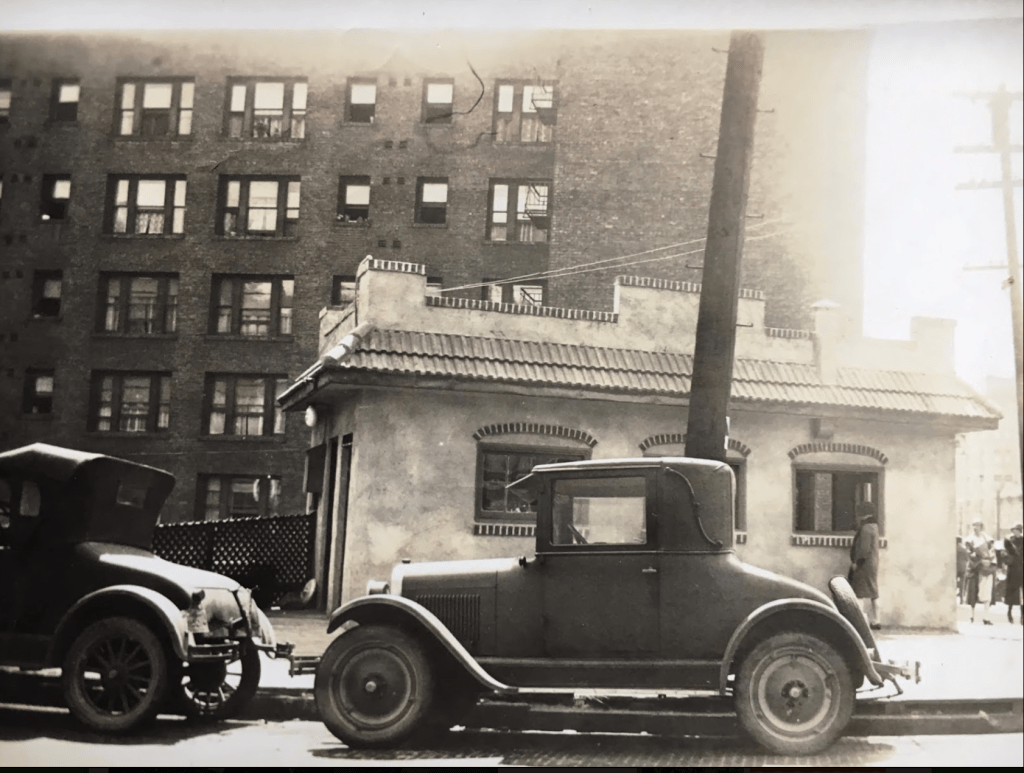
They then moved to Chico and had a lunch counter across the street from a city park. Mr. Barceloux contacted Jesse from the bank that ran Cal Lands Inc. Mr. Barceloux had heard about Jesse from his brother who had set up Jesse in the Orland ranch. So the family moved to Middletown and had an even bigger farm than before. They had many acres plus 2 riding horses. One was a big Percheron named Duke. This location worked until sheep rustslers became too much of a problem and the Barceloux took back the ranch to run themselves.
Jesse would go to the local job agency where he could ask for a housekeeper and cook. When one would quit, back would go Jesse to obtain the next replacement. Melva remembers the various housekeepers dragging the two children to a variety of churches over the years. The children also received many different child rearing approaches by the various housekeepers.
In 1936 Jesse now had his sixteenth housekeeper Leota. She was 33 years younger and came with two children of her own. They were now living on a sheep ranch in Middleton. Leota soon was sleeping with Jesse and her children Wanda and Ernie were attending local schools. One day Leota was cleaning Melva’s room. Leota turned on Melva’s radio to a country station to help make her chores more pleasant. Melva came into the room and became quite upset that Leota would change the station on her radio. Melva immediately went to her father to complain and insist that Leota be fired or she was leaving. Melva had pulled this maneuver before and had gotten several housekeepers fired. This time Jesse was not going to budge. Leota was here to stay. He had a choice between an indulged teenager soon to graduate from high school and a good housekeeper who became a wonderful companion. The choice was done and Melva got on a bus and went to Los Angeles to live with a cousin and finish high school there. Melva never returned to live with Jesse ever.
In 1937 Jesse and Leota got married and now had three children living in their home, Ronald 13, Wanda 11 and Ernie 9. In the 1940 census Jesse is listed living in Ten Mile River in Mendocino California. He is listed as a proprietor. One of the census questions was how many hours he had worked the week of March 24th to March 30th. Jesse replied with 77 hours. Another question was how many full weeks had he worked in the year 1939. His reply was 51 weeks. Jesse was obviously a very hard worker.
Listed as living in Jesse’s house was Jesse age 65, Leota 33, Melva 20, Ronald 17, Wanda 14 and Ernie 12. Melva had not lived under the same roof with Jesse for the past three years. This is the third time Jesse made false statements on government documents. Melva was listed as employed as a waitress. Melva was attending College of the Pacific and was soon to be married.
Jesse was invited to Melva’s wedding but with the stipulation that Leota was not invited. Jesse used the excuse that he could not attend because he did not have proper shoes. Floyd, Melva’s soon to be husband, found out Jesse’s shoe size and borrowed shoes for him. Jesse then did attend without Leota.
Going through letters between Melva and Floyd, I read where Melva mentions several times that she and her father have a bad relationship that both want to repair but neither of them knew how to begin. Jesse had finally found a great partner in Leota. She adored him and she took care of him when he became ill before his death in 1961 in Napa, California. Jesse’s son Ronald left after high school and follow his sister Melva to the College of the Pacific. Wanda, Leota’s daughter had her troubles and eventually Jesse and Leota ended up raising Wanda’s daughter Sharon until she was out of high school and on her own. Sharon was the same age as Melva’s oldest child, Donna.
As a child, I remember Jesse and Leota’s visits to our home. Jesse never called ahead and would just end up at our door expecting dinner and a bed for the night. Jesse and Leota planned their trips around staying with friends and family along the way. Within ten minutes Jesse had his grandchildren all excited by pranks he would pull. His favorite was trying to put his stump of a middle finger in one of our ears. He had lost part of his finger in a carpentry accident One of us would be screaming or laughing quite loudly and Mom would get upset. We enjoyed our grandfather but our mother never seemed to.
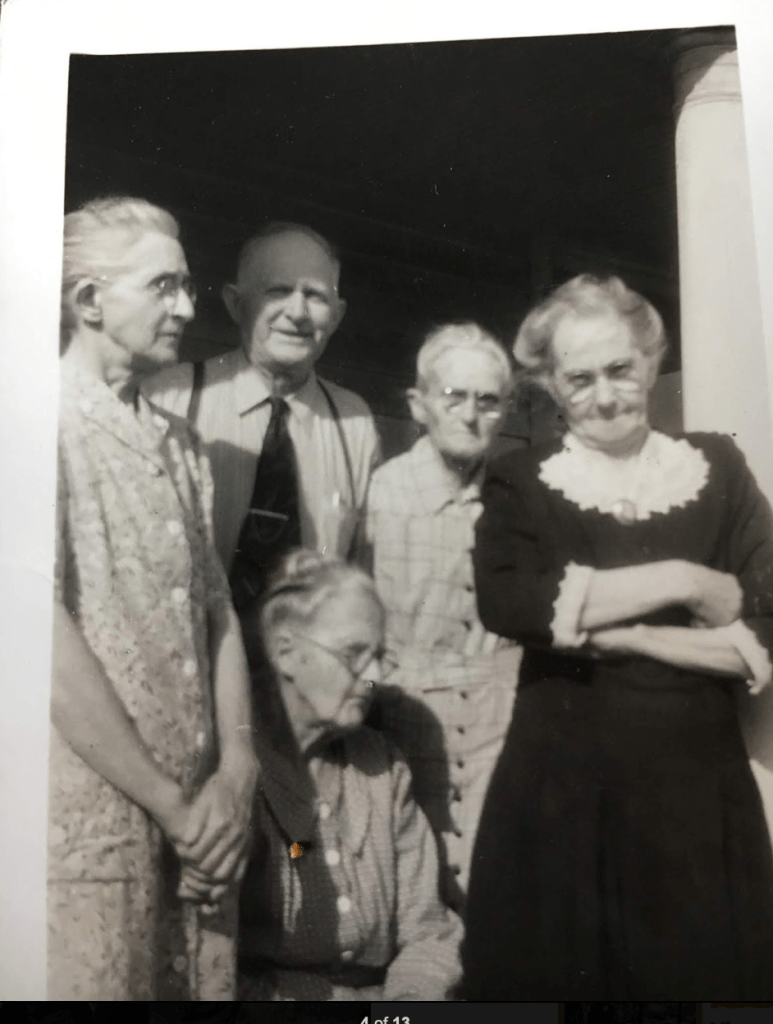
Jesse ended up in Napa where he found a job managing the produce section in a grocery store. He built a small two-bedroom one- bath house by himself for the two of them. He had a rabbit hutch and a chicken pen. I also remember a large garden full of vegetables in the backyard. Jesse never financially recovered from that house fire and his dream went away with it. When Jesse was in his 70s, he and Leota and Sharon went on an extended trip back to Missouri to visit the surviving Boone siblings. Leota took many black and white pictures that later Ernie’s wife gave to me. Mom was still alive and was able to see them also. One picture was of the Millwood Church near Edina where Jesse had attended growing up. Mom was so surprised and did not realize her father had any religious experience as he never took her or her brother to any church.
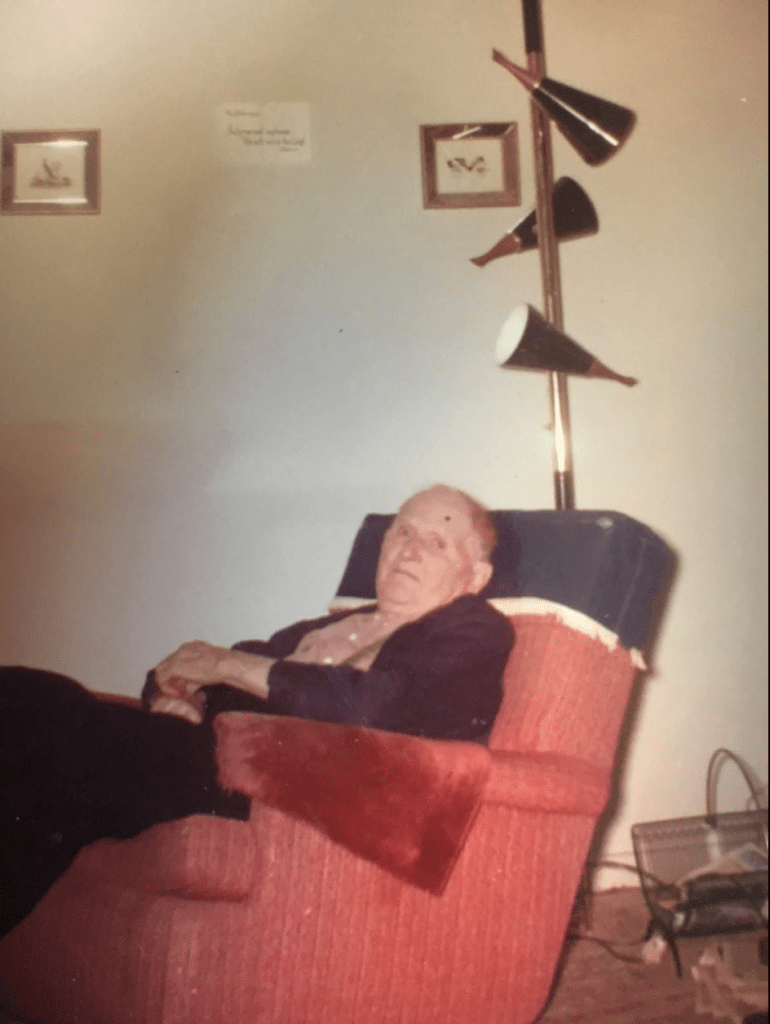
I was eleven years old when Jesse died at age 86 of prostate cancer in Napa. Mom let Leota take care of all of the arrangements and we just showed up for the service. Mom had taken us to the funeral home the day before where he lay in his open coffin for viewing. She thought we should see him before the service so we would not be shocked. I remember thinking the undertakers had messed up his mouth. It didn’t seem to be my grandfather. Jesse’s funeral only mentioned his last 24 years of his life as that was all Leota knew. Jesse had been a selectman in Boise, Idaho and quite a man about town before he lost the dairy. Mom felt remorse that she had not reached out and help Leota with more information.
I am including an obituary and biography that was published in Idaho and most likely written by Jesse.
Napa Register
April 14, 1961:
Funeral services will be held Saturday at 2 p.m. in the Treadway and Wigger Garden Chapel for Jesse Sylvester Boone, 86, retired farmer and dairyman who died Thursday at his home, 2078 W. Pueblo Ave.
A native of Edina, Mo., Mr. Boone came to California in 1929 and farmed in Lake County before moving to Napa in 1937. He was the husband of Leota Boone; the father of Melva V. Swagerty of Stockton and Ronald F. Boone of Bijou, Calif.; stepfather of Ernest Fahnholz of Lakeport and Wanda Monahan of San Francisco; grandfather of Donna, Bryan, Jane and Grant Swagerty of Stockton; stepgrandfather of Sharon Pistore of Napa, Linda and Stanley Fahnholz of Lakeport, and Bruce and Kennie Smith of Berkeley; and brother of Anna Moore of Kahoka, Mo.
The services will be conducted by the Rev. Andrew Juvinall of the Methodist Church. Cremation will follow at Tulocay Cemetery.
Published in History of Idaho: The Gem of the Mountains Vol. 3 by James H. Hawley 1920:
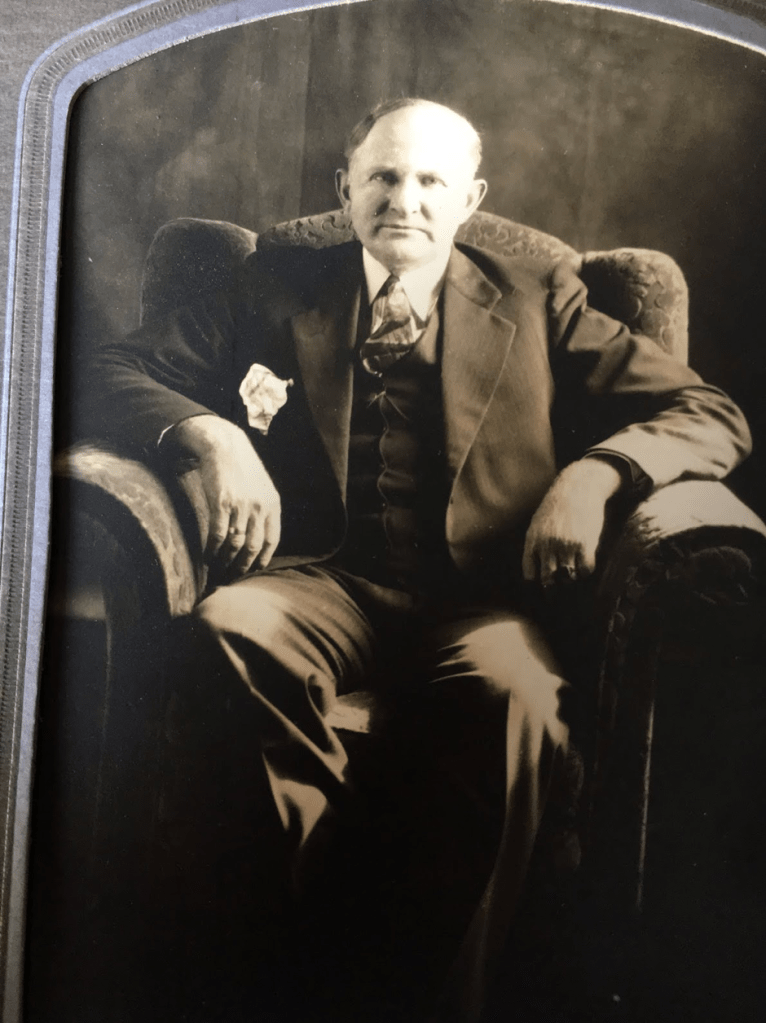
Jesse S. Boone is one of the proprietors and the manager of the Early Dawn Dairy, conveniently situated about two and a half miles south of Boise. Here they have a most modern plant and the business since its establishment in the early spring of 1919 has developed with most gratifying rapidity. Mr. Boone, who is concentrating his entire time and attention upon the management of the business, came to Ada county, Idaho, in 1904 from Montana, where he had been located for six and a half years. He is, however, a native of Missouri, his birth having there occurred May 6, 1874. He is a son of Milton C. Boone, a farmer and a veteran of the Civil war, who was born in Ohio and in early manhood wedded Anna Cunning ham, a native of Indiana. Both have now passed away. Jesse S. Boone is also a descendant of Daniel Boone.
He was reared and educated on a farm in Missouri and in 1897 went to Montana. He spent six years in ranch and dairy life in that state and in 1904 came to Idaho, settling on a fruit ranch near Meridian, comprising sixty acres, of which forty acres was devoted to the production of prunes. He is still the owner of that property and resided thereon until the spring of 1919, when he removed to a point two miles south of Boise and in connection with Clyde E. Summers, the well known undertaker and county coroner of Boise, established the Early Dawn Dairy. They have more than one hundred fine cows, sixty per cent of them being splendid specimens of the Holstein-Frisian breed, while the others are Jersey and mixed breeds. The company built a new dairy barn, one hundred and fifty feet long, supplied with stanchions and with large silos adjoining. They have a modern dairy plant near-by, in a separate building, which is equipped with cooling and clarifying apparatus, together with bottling machines and washing and sterilizing equipment. There is also a cold storage room in which the pure, bottled milk is kept for twelve hours before delivered to the seven hundred customers of the plant in Boise. The Early Dawn Dairy represents an investment of about twenty-five thousand dollars. The product of the dairy is distributed to the retail trade by three large Studebaker motor trucks and they now have seven hundred patrons. Mr. Boone has also been identified with other business interests aside from his orcharding and dairying.
On the 1st of July, 1918, Mr. Boone was married to Miss Virginia Brown, of Meridian, Idaho, but also a native of Missouri. She came to this state a few years ago with her parents. To Mr. and Mrs. Boone has been born a daughter, Melva Virginia, born October 4, 1919.
In his political views Mr. Boone is a stalwart Republican and was elected county commissioner from the third district in 1916, filling the office until January, 1919, when he refused to again become a candidate. Fraternally he is connected with the Modern Woodmen of America and is a prominent Mason, having attained the thirty-second degree of the Scottish Rite, while with the Nobles of the Mystic Shrine he has also crossed the sands of the desert. In all matters of public concern he takes a deep and helpful interest and for several years he has been a member of the advisory board of the Idaho State Fair Association.
As a post script I am including a letter I wrote to Ernie’s widow, Vickie on her 87 birthday.
2014
Dear Vickie,
I am thankful I have the opportunity to relate to you how special you and Ernie have been to our family.
My mother, Melva, and her brother, Ron, were a tight exclusive group. Over the years Ernie penetrated that sibling group and was a “true” brother. You, Vickie, were there to support Ernie and I wonder if Uncle Ronnie could have survived without your hospitality in the end.
I remember with such fondness Mom’s and my special guided tour of the Middletown area. I got a peek into part of Mom’s childhood. Mom got to remember important places in her life. She was quite reflective on our drive home and again gave credit to Leota for being a very special person in her father’s life. Mom admitted being mean to Leota during the years and it was obviously unwarranted and displaced.
You and Ernie were there for all of our family’s memorable occasions. You generously shared Leota and your photos that would be of interest to us.
I wish you a belated birthday and am honored to share it with you. You should be so proud of your family and they reflect back on to you and your importance on family.
Love,
Donna Swagerty Shreve
 Swagerty-Aldrich Family Web Site