1828 – 1905
by Donna Swagerty Shreve
Milton, great grandfather on my mother’s side of the family, was the fourth child of eight born to Joseph Boon age 38 and Maria Nichols age 30. I have a sketch done of Milton and Ann during their later years. The portraits hang proudly among the relatives featured in my living room. Milton had a rough life and I have attempted to flush out some of the details to make him seem more of a personality besides just dates in history. The Joseph Boon family had seven boys and one girl. Milton was born in Ohio and the three older siblings had been born in Maryland where the original Boones arrived from England in 1725. With Milton’s generation, the spelling of Boon changed from no e to an e on the end of the name
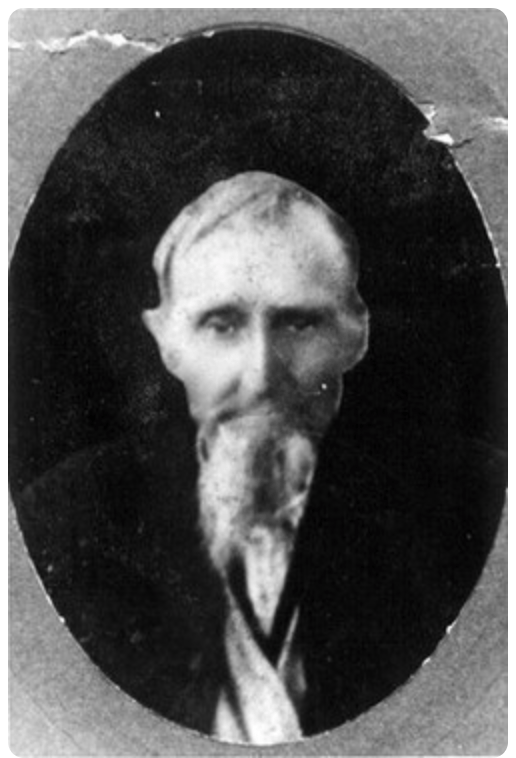
By the time Milton was 22 the family had moved to Knox County in the northeast corner of Missouri. Before Milton settled down and married, he tried his luck in California and became one of the 49ers. The family stories have him joining a wagon train that headed west.
Milton joined the wagon train as a single guy heading out to try to get his fortune in the gold fields. Along the way west, another single guy bragged to some of the members that he wanted to kill him an Indian. That brag was strongly discouraged by the wagon master.The braggart went off by himself for a few hours. Leaving the train was done for hunting and scouting . That same evening the wagon train members found themselves surrounded by quite angry local Indians. Through various means of communication, the Indians demanded the person who had killed one of their tribe that day. If that person was not handed over, the Indians would start to retaliate by killing various people in the wagon train, Tensions rose and Milton was quite convinced he had limited time left on this earth. Finally the guilty wagoner spared his group imminent harm by surrendering himself to a certain horrible death. This encounter affected Milton so much that a year of so later, he went back to Missouri on a boat and sailed around the horn instead of risking another overland trek through Indian territory.
During his time as a gold miner, Milton occupied his spare time participating in running races. A first cousin of my mother, Opal Douglas Gardner, came to California to visit relatives in the 1960s and to do a bit of sightseeing. Opal went to the State capital and saw a mural depicting activities done by gold miners to entertain themselves. Milton Boone was depicted as an excellent foot runner and winning his race. I went, after the capital building had been renovated, to try to see that mural and take a picture of it. I couldn’t find it so I inquired with several people who worked there. When I asked one researcher, he was unaware of such a mural. He did mention someone from Missouri had called the previous month with the same question. It remains a mystery but I am convinced Milton was a fast runner and depicted on a mural in the state capital building. After an unsuccessful attempt at getting rich from gold mining, Milton return to Missouri on a ship out of San Francisco going around the horn.
As was the custom in his era, Milton didn’t marry until he was established as an adult. At age 30 he married Ann Cunningham age 23 in Rutledge in Knox County, Missouri. They were both older and started their family right away. Their first child was Sarah and she was born a year after their marriage date of 1859. The 1860 census has Milton, Ann and baby Sarah living with Ann’s parents Robert and Rachel Cunningham in Fabius, Missouri.

As part of her wedding present, Ann received 80 acres of farm land. Milton had chosen well and married the farmer’s daughter. Ann stayed with her parents as Milton went off to fight in the Civil War. Milton returned home on occasion as the children kept coming to their family. Ann’s mother Rachel died in April of 1863 and by August of that same year Ann gave birth to a girl who she named Rachel Alice Boone who married into the Killen family. It seems logical that daughter was named in memory of Ann’s mother. Several of the children’s names can be found in the previous generation on both sides of the family.
Milton was part of the Knox County crowd of young men that enlisted in the Civil War together. Five of Joseph Boone’s sons enlisted. The youngest brother was too young at the time of the Civil War. Milton was a private enlisted in Company G from Missouri. He was in an infantry regiment and I am assuming he saw battle numerous times based on where his company engaged in battles. A family story that has been told and retold over the years involved Ann’s father and brother. She would have been in the house during the incident.
The following narrative was taken from History of Knox County, State of Missouri, published in 1887. Robert Cunningham, father of Ann Cunningham Boone, was an ardent supporter of the Northern cause during the Civil War. Cunningham was known as a prominent radical Unionist and had done considerable service in the aid of the Federal cause. Though he was not a member of any of the military services, he had one tragic experience right in his own yard. Robert was thought to be about 57 years of age when the incident occurred though he was referred to as “elderly abolitionist firebrand” in the account from the book “Twenty-first Missouri.”
It reads: In early September, the Cunningham boys of Company D learned that there had been a battlefield on August 28. Bill Ewing’s guerrillas, slipping down to the Middle Fabius above Millport, rode across “Old Bob” Cunningham’s farm intending to arrest him, burn his house and appropriate his horses “You burned my house and I will even up with you before this war is over,” yelled Bill Ewing. Cunningham proved a hard man to arrest. Old man was fighting like a tiger. He pitched into the gang trying to capture him, even though one intruder shot him in the arm. Old Bob managed to wrench the attacker’s revolver out of his hand after being shot.
As the little civil war raged in Cunningham’s yard, a strong force of the fiftieth Enrolled Missouri Militia suddenly appeared, having galloped up from Edina. As the party arrived. they witnessed the Confederates taking the horses from the stables. The rescuers were partly from Company C commanded by Captain Lucius Woodruff. Old Bob’s son and namesake, Rob Cunningham, was fatally wounded as he rode into the barnyard with his comrades. He was shot coming over a bridge coming into the barnyard. His mother was looking out a window and was a witness to her son’s fatal wound. The young man was carried into his own home and laid out in the presence of his wounded father who was well nigh beside himself with grief and rage. From then on, Mr. Cunningham regarded all rebels with an intense hatred that was ever modified to the day of his death. Also fatally wounded was Bill Ewing in the “affair at Cunningham farm.”
Taken to Edina to have his wounds dressed, Old Bob Cunningham questioned the attending doctor, “Hold on a minute! If you have one drop of rebel blood in your veins, you shall not dress my wounds, but if you are thoroughly loyal to your country, go ahead.”
The rest of the Union militia reinforced the first group and the Confederates were driven away in disorder and leaving behind them 15 of their own horses from which they had dismounted when they entered the stable.
During the Civil War years, the Milton Boone family had three more births. A son lived only a few days but the two daughters survived and married. It took two more daughters to be born before the first surviving son was born in 1871. William lived for six years before he died. After all thirteen children were born eleven survived and only three of them were sons.
By November 1904 his wife Ann died after an illness. He was in poor health and died less than a year later in August 1905 at age 77. He died in the home of his son-in-law J.W. Douglas who married his daughter Lucinda. He was buried with his wife and children in the private Cunningham cemetery in Fabius.
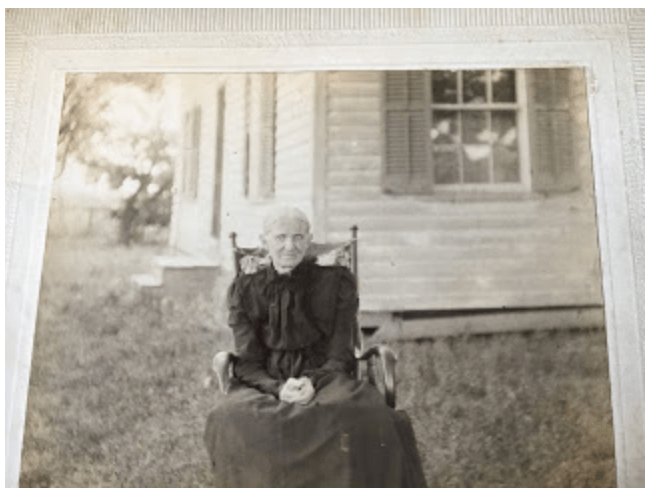
I concluded that Milton lived through some dangerous times and should be considered fortunate that he only had two sons die. Milton survived both the gold rush adventure and the Civil War. He was thought of as a good citizen and help to raise a family that continued to contribute to his community. My grandfather Jesse Boone was born when his father was 46 years old. Jesse was also 46 when his first child Melva, my mother, was born. Jesse did not have the advantage of a wife to help raise the children as Milton did but I try to imagine what kind of conversation Jesse would have had with his father if Milton had been alive when Jesse became a father.
 Swagerty-Aldrich Family Web Site