by Donna Shreve
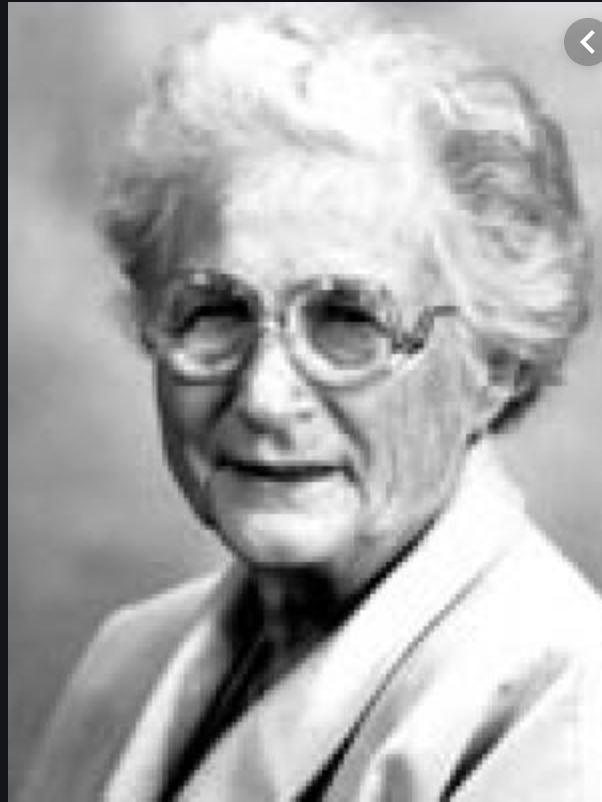
I had been teaching for just over 20 years when I realized I needed help in mathematics. I had breezed through school until I entered my Algebra II class. Memorizing formulas and facts no longer worked. Algebra II demanded understanding. I struggled and limped through the school year. I did not even consider future higher level math classes in either high school or beyond what was required in college.
In 1982 I interviewed for a new special program in Lodi aimed at gifted and talented education for grades fourth through sixth grades. I was chosen for the fifth grade classroom. Fifth grade was always my favorite level as ten years old are capable of so much. I also enjoyed the history of the United States from the Colonial Era through the Western Expansion and Civil War. My weakness in teaching skills was mathematics.
I did to my students what had been done to me. A math book was opened and gone through page by page. It was no wonder too many students and teachers did not enjoy math.
At the beginning of the 1982-1983 school year, two students came up to me when they could talk privately. They were very polite but they wanted me to know that their fourth grade teacher had let them go at their own pace. Both boys had finished all of the approved math text books through eight grade. They now wanted to learn algebra. I was in trouble!
I immediately reached out to several middle school math teaches for help and suggestions. One of the teachers I reached out to had a typical response. “Give them this math survey. It should knock them down a peg or two.” The teachers were more of a problem of my students’ future instead of giving a solution to my present problem of meeting my students’ needs.
A Gifted And Talented Education conference was coming in another month and I told the two boys I would hopefully bring home some good ideas. At the GATE conference, I went to as many math sessions that I could. One session was Col. Beard showing how to measure spaces with tetrahedrons. I had to stop my self from releasing nervous giggles. At that time I did not know what a tetrahedron was, let alone measure anything with such a shape.
Fortunately for me I attended another session that included Mary Laycock, a teacher and consultant for Nueva Learning Center that was located in Hillsborough California. Various wealthy Bay Area residents who were well connected sent their gifted children to this marvelous private school. The session I attended featured a promotion film created by George Lucas who had a child attending Nueva. I actually fantasized about sending my two boys to this school and teaching there. The expense and logistics quickly faded that dream.
After several Nueva teachers were introduced, I zeroed in on Mary Laycock as she was their math specialist and had published over 50 books for teachers on how to teach specific skills using hands on manipulative devices to make the math concepts come alive. I was now inspired and had some beginning ideas of how to make math a better subject in my classroom.
I bought several of Mary’s books and was bubbling with ideas. Money was a factor so I improvised the materials I needed. First thing I did when I returned to school was to run off centimeter grid paper and glued ten by ten centimeters squares to cardboard. The idea of base ten blocks was to give shape to the abstract squiggly lines we call numbers. I used the approach of all of us in the classroom learning together. As I fumbled along, the students felt safe to make mistakes along with me. At one point when several of us were on the rug in a circle, one of my students commented, “You don’t know what you are doing, do you.” I replied, “No I don’t, help me.”
Math was now conceptual and many of us improved our overall concepts rapidly. About mid year I had a father of one of the students come up to me and ask about my use of the base ten blocks. At first I was uncertain why he was asking so many questions. He then revealed that his son now enjoyed math because of this new approach. This generous father asked me how much the real materials would cost. I was able to show him a catalogue and he then wrote me a check for $350 so I could have a classroom set of materials of much better quality.
Through various teacher networks, I learned that Mary Laycock was giving a two week seminar in the upcoming summer in Hayward. The time would be spent learning the many different uses of base ten blocks in a math classroom. I stayed with my brother-in-law in Alameda and commuted each day on the Nimitz Freeway. I wondered if I was getting in over my head. I went with the junior high/high school group because I taught gifted fifth graders.
Quickly I was learning math along side of high school teachers. I was much more of a conceptual learner and learned certain techniques quicker than my high school colleagues because I did not let formulas get into the way. I now wanted to share Mary’s magic with teachers in my school district. I arranged for Mary to give some workshops at various locations in Lodi district. Mary now stayed with my family as she gave her workshops throughout the area. There came a time where I graduated into her role and gave workshops throughout northern California.
Forward to the end of our partnership. I would drive to Hayward to pick her up and then deliver her back to her home when her workshops were over. I even was able to have Mary give a whole day series of classroom demonstrations for Sebastopol School District where my son Aaron taught. Mary worked part time at Nueva and then gave workshops on her days off. Mary became part of our family and was another grandmother to my boys. I would meet her at the annual Asilomar Math Conference and she would introduce me to her friends who were big shots in the world of math. I learned so much being a part of her math world.
When Mary would give classroom demonstrations and had a break, she would hang out in my classroom. She had very definite ideas about learning theories and she gave me feedback on what she saw. She would mention positives and ways I could improve my teaching skills.
A classroom teacher rarely gets feedback from professionals. Some principals give the yearly observation and evaluations based mostly on classroom management. Mary gave feedback that was productive and quite helpful. I grew to know Mary better and could start imagining he in my classroom often. I knew what Mary would like and when I cut corners or was not properly prepared. Mary helped me so much with my math skills that I started giving workshops for teachers in the district and then state wide. I even presented at the annual Asilomar Math conference which I considered quite an honor.
Time marches on and Mary retired and I moved on to not teaching math as I did not have a math credential. I made two attempts to take college level math but was horrified to realize both classes were versions of the linear horror shows from my past. I decided I was not motivated enough to take on the struggle. I switched to teaching my credentialed major English. Fortunately Aaron has taken on the mantle of teaching math to seventh graders. I just wish Mary had lived long enough to mentor Aaron. His math skills are so superior to mine.
 Swagerty-Aldrich Family Web Site